
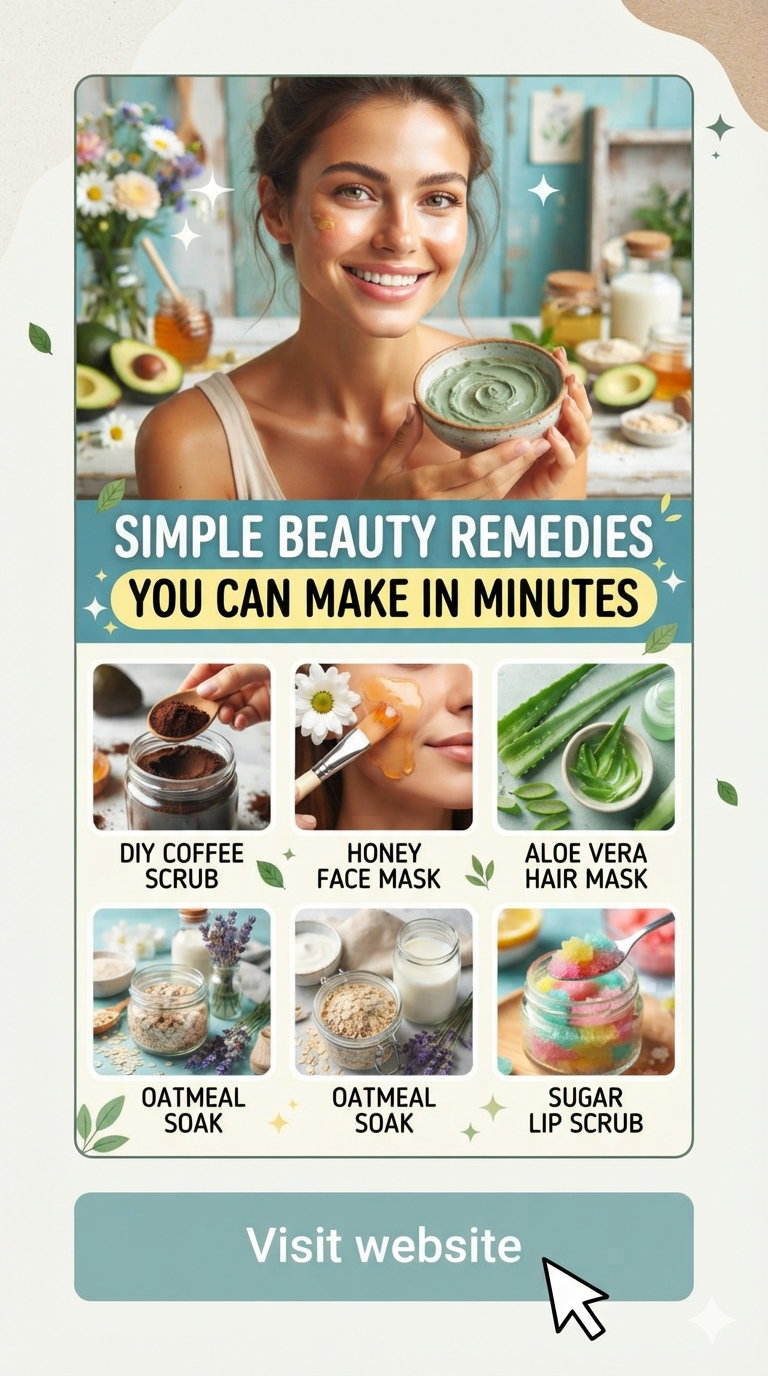
Simple Beauty Remedies You Can Make in Minutes
The Kitchen Apothecary: Simple Beauty Remedies You Can Make in Minutes
In an era of complex chemical formulas and high-end price tags, the most potent beauty secrets often hide in plain sight—right inside your kitchen pantry. DIY beauty is not just about saving money; it is about reclaiming control over what goes onto your skin, your body’s largest organ. By using raw, unprocessed ingredients, you eliminate synthetic fragrances, parabens, and preservatives, replacing them with bioavailable vitamins, minerals, and antioxidants.
This comprehensive guide explores the art of “Fast Beauty”—remedies that take minutes to prepare but offer long-lasting results. Whether you are looking to brighten a dull complexion, soothe a dry scalp, or soften tired feet, these natural solutions provide professional-grade results without the laboratory baggage.
Part 1: Facial Radiance – Cleansers, Toners, and Serums
The face is the most exposed part of our body, subjected to pollution, UV rays, and stress. Maintaining its health requires a balance of cleansing, pH restoration, and deep nourishment.
1. The 2-Minute Honey Cleanser
Honey is a natural humectant, meaning it draws moisture into the skin. It also possesses antibacterial properties, making it an ideal cleanser for all skin types, especially acne-prone skin.
- Ingredients: 1 tablespoon of raw, organic honey.
- The Process: Dampen your face with warm water. Massage the honey onto your skin in circular motions. Let it sit for 30 seconds if you have time, then rinse with lukewarm water.
- Why it works: Raw honey contains enzymes that clear pores and gluconic acid, which gently exfoliates dead skin cells.
2. The Green Tea & Apple Cider Vinegar Toner
After cleansing, it is vital to restore the skin’s acid mantle. This toner balances pH and tightens pores.
- Ingredients: 1/2 cup brewed green tea (cooled), 1 tablespoon raw apple cider vinegar (ACV).
- The Process: Mix the two liquids and store them in a glass spray bottle. Spritz onto a cotton pad and swipe across the face.
- Why it works: Green tea is packed with polyphenols that reduce inflammation, while ACV contains alpha-hydroxy acids (AHAs) that refine skin texture.
3. The Glow-Inducing Vitamin C Serum
Vitamin C is notorious for being unstable in commercial products. Making a fresh batch every few days ensures maximum potency.
- Ingredients: 1/2 teaspoon Vitamin C powder (L-ascorbic acid), 2 tablespoons Rosewater, 1 teaspoon Glycerin.
- The Process: Dissolve the powder into the rosewater completely, then stir in the glycerin. Store in a dark glass bottle.
- Why it works: Vitamin C stimulates collagen production and brightens hyperpigmentation.
Part 2: Intensive Face Masks for Every Skin Concern
Masks provide a concentrated dose of nutrients. These recipes are designed to be mixed and applied in under five minutes.
4. The Brightening Turmeric Mask
Turmeric has been a staple in Ayurvedic beauty for centuries due to its anti-inflammatory and brightening effects.
- Ingredients: 1 teaspoon Turmeric powder, 1 tablespoon Greek yogurt, 1 teaspoon Honey.
- The Process: Mix into a paste, apply for 10 minutes, and rinse.
- Warning: Turmeric can stain pale skin; if this happens, wipe with a cotton pad soaked in milk.
- Benefits: Reduces redness and fights “maskne” or hormonal breakouts.
5. The Deep-Hydration Avocado Mask
For those with dry or flaky skin, avocado provides essential fatty acids.
- Ingredients: 1/4 ripe Avocado, 1 teaspoon Jojoba oil (or Olive oil).
- The Process: Mash the avocado until smooth and stir in the oil. Apply for 15 minutes.
- Why it works: Avocado is rich in Vitamin E and Oleic acid, which penetrate deep into the dermis to lock in moisture.
6. The Oil-Absorbing Bentonite Clay Mask
If you have oily or congested skin, clay is your best friend.
- Ingredients: 1 tablespoon Bentonite clay, 1 tablespoon water or ACV.
- The Process: Mix using a non-metallic spoon (metal deactivates the clay’s ionic charge). Apply until it starts to dry, then rinse.
- Why it works: The clay acts like a magnet, drawing out toxins and excess sebum from the pores.
Part 3: Hair Care – From Scalp to Tip
Healthy hair starts at the root. Many commercial shampoos strip the hair of natural oils, leading to a cycle of greasiness and dryness.
7. The Stimulating Coffee Scalp Scrub
Exfoliating the scalp removes product buildup and stimulates blood flow to the hair follicles.
- Ingredients: 2 tablespoons Coffee grounds, 1 tablespoon Coconut oil.
- The Process: Massage the mixture into your scalp before shampooing. Focus on the crown and temples.
- Why it works: Caffeine has been shown to potentially stimulate hair growth by counteracting the effects of DHT, the hormone responsible for hair loss.
8. The “Liquid Gold” Argan & Rosemary Oil Treatment
Rosemary oil is frequently compared to Minoxidil for its hair-thickening properties.
- Ingredients: 2 tablespoons Argan oil, 5 drops Rosemary essential oil.
- The Process: Warm the oil slightly, apply to the scalp and ends, and leave for 30 minutes (or overnight).
- Why it works: Argan oil coats the hair shaft to prevent breakage, while rosemary improves circulation.
9. The Ultimate Protein Egg Mask
Hair is primarily made of protein (keratin). An egg mask provides the building blocks for strength.
- Ingredients: 1 Egg, 1 tablespoon Olive oil.
- The Process: Whisk together and apply to damp hair. Leave for 20 minutes.
- Crucial Tip: Rinse with cool water. Using hot water will “cook” the egg in your hair, making it impossible to remove.
10. The Apple Cider Vinegar Shine Rinse
Dull hair is often the result of “raised” hair cuticles. ACV flattens the cuticle, allowing light to reflect off the hair.
- Ingredients: 1 cup water, 2 tablespoons ACV.
- The Process: After conditioning, pour the mixture over your hair. Do not rinse it out. The smell dissipates as the hair dries.
Part 4: Body Care – Exfoliation and Deep Moisturization
The skin on our body is thicker than facial skin and can handle more vigorous exfoliation and heavier oils.
11. The Invigorating Sugar & Lemon Body Scrub
Sugar is a gentle physical exfoliant, while lemon provides a hit of Vitamin C.
- Ingredients: 1/2 cup Granulated sugar, 1/4 cup Almond oil, juice of half a Lemon.
- The Process: Mix into a sandy consistency and use in the shower, focusing on knees and elbows.
- Caution: Do not use on freshly shaved skin, as the lemon will sting.
12. The “Whipped” Shea Butter Moisturizer
Shea butter is incredibly dense. Whipping it makes it airy and easy to apply.
- Ingredients: 1/2 cup Raw Shea Butter, 2 tablespoons Coconut oil.
- The Process: Melt the ingredients together, let them cool until slightly firm, then whip with a hand mixer until it looks like whipped cream.
- Why it works: High concentrations of fatty acids and vitamins make shea butter an ideal cosmetic ingredient for softening skin.
13. The Detoxifying Himalayan Salt Soak
Bath soaks are the ultimate form of self-care, relaxing the muscles and the mind.
- Ingredients: 1 cup Himalayan Pink Salt, 10 drops Lavender essential oil.
- The Process: Dissolve in a warm bath and soak for 20 minutes.
- Why it works: The minerals in the salt (magnesium, potassium, calcium) are absorbed through the skin, helping to reduce inflammation and promote sleep.
Part 5: Eyes, Lips, and Extremities
Small details make a big difference. These targeted treatments address specific areas that are often neglected.
14. The De-Puffing Potato Eye Treatment
While cucumbers are famous, potatoes contain an enzyme called catecholase, which is even more effective at brightening dark circles.
- Ingredients: 2 slices of raw, cold Potato.
- The Process: Place the slices over your eyes for 10 minutes.
- Why it works: The cold constricts blood vessels, while the starch helps reduce swelling.
15. The Cinnamon Lip Plumper
Get a temporary plump without the needles.
- Ingredients: 1/2 teaspoon Cinnamon powder, 1 teaspoon Olive oil.
- The Process: Rub gently onto the lips for one minute, then wipe off.
- How it works: Cinnamon is a mild irritant that increases blood flow to the lips, making them appear fuller and redder.
16. The Softening Banana Foot Mask
Don’t throw away overripe bananas. They are the perfect remedy for cracked heels.
- Ingredients: 1 ripe Banana, 1 teaspoon Honey.
- The Process: Mash into a paste, apply to the feet, wrap in plastic wrap, and wait 15 minutes.
- Why it works: The amino acids and Vitamin A in bananas help repair dry, damaged skin.
Part 6: The Science of Natural Ingredients
Understanding why these ingredients work empowers you to create your own recipes. Nature provides a sophisticated toolkit for dermatological health.
Antioxidants: The Defense Shield
Ingredients like Green Tea, Vitamin C, and Coffee are rich in antioxidants. These molecules neutralize free radicals—unstable atoms that damage cells and accelerate aging. By applying them topically, you provide a shield against environmental stressors.
Humectants vs. Occlusives
- Humectants (Honey, Aloe Vera, Glycerin): These attract water molecules. They are essential for hydrating the skin.
- Occlusives (Beeswax, Coconut Oil, Shea Butter): These create a physical barrier on the skin’s surface. They are essential for locking in the moisture that humectants provide.
- For best results, always apply a humectant first, followed by an occlusive.
Natural Acids (AHAs and BHAs)
- Lactic Acid (Yogurt/Milk): A gentle AHA that exfoliates and hydrates.
- Salicylic Acid (Strawberries/Willow Bark): A BHA that penetrates oily pores to prevent acne.
- Malic Acid (Apple Cider Vinegar): Helps with skin cell turnover and brightening.
Part 7: Safety, Storage, and Best Practices
Since these remedies lack chemical preservatives, they require a different approach to handling than store-bought products.
1. Small Batches are Key
Natural products have a short shelf life. Most of the remedies listed above should be made fresh for each use. If you make a larger batch (like a scrub or a toner), keep it in the refrigerator and use it within 5-7 days.
2. The Patch Test
Always perform a patch test on your inner forearm before applying any new ingredient to your face. Wait 24 hours to ensure there is no allergic reaction.
3. Sun Sensitivity
Ingredients like lemon juice and other citrus oils are photosensitive. If you use them on your skin, avoid direct sunlight for at least 12 hours, as they can cause severe burns or hyperpigmentation.
4. Hygiene
Use clean, dry spoons to scoop out your creations. Introducing water or bacteria from your fingers into a jar of homemade lotion can cause mold to grow rapidly.
Part 8: The Philosophy of Conscious Beauty
DIY beauty is more than a routine; it is a ritual. It encourages a slower pace of life where you become attuned to your body’s needs. Instead of masking “imperfections” with heavy makeup, these remedies focus on the underlying health of the skin and hair.
When you spend five minutes mashing an avocado or brewing a green tea toner, you are practicing mindfulness. You are honoring the ingredients provided by the earth and treating your body with the respect it deserves. This holistic approach often results in a “natural glow” that no highlighter can replicate—a glow that comes from health, balance, and the joy of self-care.
Conclusion
The journey to radiant beauty doesn’t require a laboratory; it requires curiosity and a trip to the grocery store. By integrating these simple, minute-long remedies into your weekly routine, you will witness a transformation that is both visible and sustainable. From the tightening effects of an ACV rinse to the deep nourishment of a honey cleanse, nature offers everything you need to look and feel your best. Start small, experiment with what you have, and discover the power of the kitchen apothecary.