
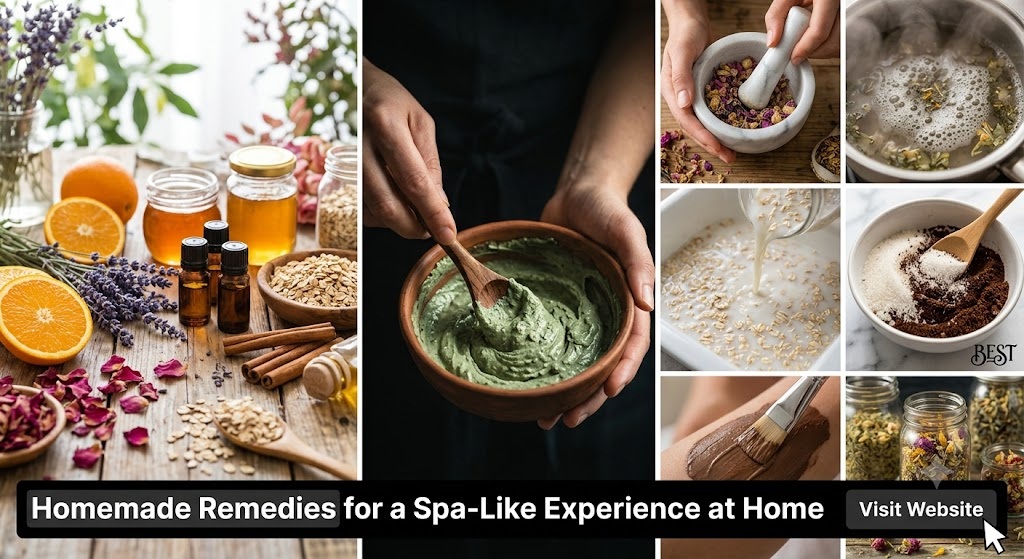
Homemade Remedies for a Spa-Like Experience at Home
The Ultimate Guide to the Homemade Spa Experience: Sanctuary in Your Own Home
Transforming your home into a professional-grade spa is an art form. It requires more than just a hot bath; it involves a holistic approach to ambiance, natural chemistry, and mindfulness. This guide will walk you through every facet of the homemade spa experience, providing you with decadent recipes, professional techniques, and the secrets to creating a lasting state of Zen.
Part I: Setting the Sanctuary – The Science of Ambiance
Before a single drop of essential oil touches your skin, you must prepare your environment. The brain’s relaxation response is triggered by sensory cues. If your bathroom is cluttered or your lighting is harsh, your nervous system will remain in “alert” mode.
1. Lighting and Visual Tranquility
Harsh overhead LED lights are the enemy of relaxation. They suppress melatonin and keep the brain stimulated.
- Candlelight: Use beeswax or soy candles. They emit a warm, flickering glow that mimics the setting sun, signaling to your brain that it’s time to wind down.
- The “No-Tech” Rule: Leave your phone in another room. The blue light and the psychological pull of notifications are the primary barriers to a true spa experience.
- Botanicals: Bring plants into the space. Whether it’s a vase of fresh eucalyptus hanging from the showerhead or a simple potted fern, greenery increases oxygen levels and creates a “forest bathing” effect.
2. The Power of Scent (Aromatherapy)
Olfactory receptors are directly linked to the limbic system, the part of the brain responsible for emotion and memory.
- Lavender: The gold standard for anxiety reduction.
- Eucalyptus and Peppermint: Ideal for respiratory clarity and a sense of “clean” energy.
- Bergamot and Citrus: Perfect for uplifting the mood and fighting seasonal blues.
- Sandalwood and Cedarwood: Grounding scents that help with meditation and centering.
3. Auditory Bliss
Silence can sometimes be deafening if you have a busy mind. Use sound to anchor your focus.
- Binaural Beats: Specific frequencies designed to induce alpha or theta brainwaves (states of deep relaxation).
- Nature Sounds: Rainfalls, ocean waves, or forest birds create a subconscious connection to the earth.
- Soft Minimalism: Instrumental music without lyrics prevents the “narrative” part of your brain from engaging.
Part II: Luxurious Bath Rituals and Hydrotherapy
Hydrotherapy has been used for millennia to heal the body and soul. The key to a spa-like bath is the “layering” of ingredients to treat the skin while the heat relaxes the muscles.
1. The Cleopatra Milk Bath
Ancient royalty used milk to maintain soft, supple skin. The lactic acid in milk acts as a gentle exfoliant, while the fats moisturize.
- The Recipe:
- 2 cups of full-fat powdered milk (or coconut milk powder for a vegan option).
- 1/2 cup of honey (a natural humectant).
- 10 drops of rose essential oil.
- A handful of dried rose petals.
- The Benefit: Lactic acid dissolves dead skin cells, leaving your skin velvety smooth without the need for harsh scrubbing.
2. The Magnesium Detox Soak
Most people are deficient in magnesium, a mineral vital for muscle relaxation and sleep.
- The Recipe:
- 2 cups of Epsom salts (Magnesium Sulfate).
- 1/2 cup of Dead Sea salt (rich in minerals like bromide and iodine).
- 1/4 cup of Baking Soda (to neutralize chlorine in tap water).
- 5 drops of Eucalyptus oil and 5 drops of Rosemary oil.
- The Benefit: This soak draws out toxins, reduces inflammation in the joints, and prepares the body for a deep, restorative sleep.
3. The Soothing Oat & Herbal Infusion
For those with sensitive or itchy skin, oatmeal is a miracle worker.
- The Method: Do not pour loose oats into the tub (they will clog the drain). Place 1 cup of rolled oats into a muslin bag or a clean sock. Tie it tightly.
- The Add-ins: Add dried chamomile flowers and a tablespoon of almond oil to the bag.
- The Benefit: As the water flows through the bag, it creates a “milky” infusion that coats the skin in a protective, anti-inflammatory barrier.
Part III: The Art of the Body Scrub – Renewing the Canvas
Exfoliation is the process of removing the “old self” to reveal the new. Homemade scrubs are often superior to store-bought versions because they lack plastic microbeads and synthetic fragrances.
1. The Invigorating Morning Coffee Scrub
Caffeine is a vasoconstrictor, meaning it can temporarily tighten the skin and reduce the appearance of cellulite by stimulating blood flow.
- Ingredients:
- 1 cup of dry organic coffee grounds.
- 1/2 cup of brown sugar.
- 1/2 cup of melted coconut oil.
- 1 teaspoon of cinnamon (to stimulate circulation).
- Application: Massage in circular motions toward the heart to aid lymphatic drainage.
2. The Whipped Vanilla Sugar Glow
This is a gentler scrub, perfect for the entire body, including sensitive areas.
- Ingredients:
- 1.5 cups of white granulated sugar.
- 1/2 cup of jojoba oil (which mimics the skin’s natural sebum).
- 1 tablespoon of vanilla extract (or vanilla bean paste).
- The Secret: Use a hand mixer to whip the oil and sugar together. This creates a fluffy, mousse-like texture that feels incredibly luxurious.
3. Himalayan Pink Salt & Lemon Zest Scrub
Salt scrubs are more abrasive than sugar scrubs and are best for rough areas like elbows, knees, and heels.
- Ingredients:
- 1 cup of fine-grain Himalayan salt.
- 1/2 cup of grapeseed oil.
- Zest of one fresh lemon.
- The Benefit: The salt provides 84 trace minerals, while the lemon zest acts as a natural brightener for dull skin.
Part IV: Facial Rejuvenation – The Multi-Step At-Home Facial
A professional facial is a sequence of steps designed to cleanse, treat, and protect. You can replicate this at home with common kitchen and apothecary ingredients.
Step 1: The Double Cleanse
First, use an oil to dissolve makeup and sebum, then a water-based cleanser to clean the pores.
- DIY Cleansing Oil: Mix equal parts castor oil and olive oil. Massage onto dry skin for 2 minutes, then wipe away with a warm, damp cloth.
Step 2: The Herbal Steam
Steam opens the pores and softens debris.
- The Method: Fill a large bowl with boiling water. Add a handful of dried lavender and a few slices of lemon. Lean over the bowl with a towel draped over your head to trap the steam.
- Duration: 5–10 minutes. This increases microcirculation and brings a healthy flush to the skin.
Step 3: The Enzyme Exfoliant
Instead of scrubbing the delicate skin on your face, use fruit enzymes to “eat” dead skin cells.
- The Recipe: Mash 2 tablespoons of fresh papaya or pineapple. Apply to the face for 5 minutes.
- The Science: Papain (from papaya) and bromelain (from pineapple) are powerful enzymes that dissolve the protein bonds holding dead skin together.
Step 4: The Targeted Mask
Choose a mask based on your skin’s current needs:
- For Oily/Acne-Prone Skin: 1 tablespoon of Bentonite Clay mixed with 1 tablespoon of Apple Cider Vinegar. It pulls impurities from deep within the pores.
- For Dry/Aging Skin: 1/2 a ripe avocado mixed with 1 tablespoon of honey and a splash of heavy cream. It’s packed with fatty acids and vitamins E and C.
- For Dull Skin: 2 tablespoons of Greek yogurt mixed with 1 teaspoon of turmeric. The lactic acid brightens, while the turmeric acts as a potent anti-inflammatory.
Step 5: The Cooling Tone
Restore the skin’s pH balance.
- DIY Toner: Mix equal parts rose water and chilled green tea. The green tea provides antioxidants, while the rose water soothes redness.
Part V: Tress Therapy – Deep Conditioning for the Hair and Scalp
Your hair is often the most neglected part of a home spa day. Treat it to a “capillary facial.”
1. The Scalp Detox Scrub
Healthy hair starts with a healthy scalp. Build-up from dry shampoo and hairspray can clog follicles.
- Ingredients: 2 tablespoons of sea salt, 1 tablespoon of apple cider vinegar, and 1 tablespoon of melted coconut oil.
- Action: Scrub gently into the scalp before shampooing to remove build-up and stimulate hair growth.
2. The Avocado & Egg Repair Mask
This mask provides both moisture (from the avocado) and protein (from the egg) to repair damaged cuticles.
- Ingredients: 1 ripe avocado, 1 egg, and 1 tablespoon of olive oil.
- Application: Apply from mid-shaft to ends. Wrap your hair in a warm, damp towel or a shower cap. Leave for 30 minutes.
3. The Rosemary & Castor Oil Growth Serum
Rosemary has been clinically shown to be as effective as some over-the-counter hair growth treatments.
- Ingredients: 2 tablespoons of castor oil (thick and nourishing) and 5 drops of rosemary essential oil.
- Method: Massage into the roots and leave overnight for maximum absorption.
Part VI: Sole Comfort – Advanced Hand and Foot Care
Our extremities carry us through the day and are often the first places to show signs of dryness and neglect.
1. The Peppermint Tea Tree Foot Soak
A remedy for tired, aching feet and a preventative for fungal issues.
- Recipe: A basin of warm water, 1/2 cup of Epsom salts, 2 bags of peppermint tea, and 5 drops of tea tree oil.
- The Benefit: Peppermint provides a cooling sensation that relieves “heavy” legs, while tea tree oil is a natural antiseptic.
2. The Banana & Honey Hand Mask
Hands age faster than the face because they are constantly exposed to the elements.
- Recipe: Mash one overripe banana with a tablespoon of honey.
- Application: Slather on hands and put on a pair of clean cotton gloves (or even socks). Let sit for 20 minutes. The potassium in the banana helps hydrate and soften the skin.
3. The DIY Cuticle Oil
Stop picking at dry cuticles with this simple blend.
- Recipe: 1 tablespoon of Vitamin E oil mixed with 1 tablespoon of Sweet Almond oil. Keep it in a small dropper bottle and apply nightly.
Part VII: The Holistic Touch – Spa Potions and Inner Beauty
A spa experience is incomplete without addressing the internal state. Hydration and nutrition are the foundations of “the glow.”
1. Infused Detox Waters
Move beyond plain water. Infusing water makes it more palatable and adds trace nutrients.
- The Refresh: Cucumber, mint, and lime.
- The Antioxidant: Frozen blueberries and sage.
- The Digestive: Sliced ginger and lemon.
2. The Ritual of Tea
The act of brewing tea is a meditation in itself.
- Chamomile & Lavender: For sedation and relaxation.
- Holy Basil (Tulsi): An adaptogen that helps the body manage stress.
- Hibiscus: High in Vitamin C and gives a beautiful deep red color that feels like a “spa cocktail.”
3. Mindful Meditation
While your mask is setting or your feet are soaking, engage in 10 minutes of deep diaphragmatic breathing. Inhale for 4 seconds, hold for 4, exhale for 8. This “vagus nerve” stimulation tells your body it is safe to relax and repair.
Part VIII: The “Professional” Schedule – Organizing Your Spa Day
To get the most out of these remedies, follow a logical sequence. Here is a sample 3-hour “Ultimate Home Spa” itinerary:
- Hour 0:00 – 0:15: Prep the space. Turn off phones, light candles, start the music, and brew a pot of herbal tea.
- Hour 0:15 – 0:30: Apply the hair mask and the scalp scrub. Tie hair up.
- Hour 0:30 – 1:00: Draw the bath. While it fills, perform a “Dry Brush” session on your body to move the lymph. Step into the bath.
- Hour 1:00 – 1:30: While in the bath, perform the face cleanse and apply the face mask. Lean back and relax.
- Hour 1:30 – 1:45: Rinse off in a lukewarm shower. Use your DIY body scrub now to lock in the moisture from the bath oils.
- Hour 1:45 – 2:15: Dry off and wrap yourself in a warm robe. Apply body oils/lotions.
- Hour 2:15 – 3:00: Perform the foot soak while reading a book or meditating. Finish with the hand mask.
Part IX: Safety, Storage, and Sustainability
When working with homemade remedies, there are no preservatives. Follow these rules to keep your experience safe:
- Freshness: Anything containing water (like a mask made with yogurt or fruit) must be used immediately. It will grow bacteria if left at room temperature.
- Storage: Oil-based scrubs (sugar/salt) can last up to 2 weeks in a cool, dry place. Ensure no water gets into the jar, as water promotes mold.
- Patch Testing: Always test a new essential oil or ingredient on a small patch of skin (like the inside of your wrist) before applying it to your entire body.
- Essential Oil Dilution: Never apply essential oils directly to the skin. Always dilute them in a carrier oil (coconut, almond, jojoba). A general rule is 5–10 drops per ounce of carrier oil.
Conclusion: The Philosophy of the Home Spa
The true value of a homemade spa day isn’t just the glowing skin or the softened muscles—it’s the intentionality. By taking the time to source ingredients, prepare your environment, and care for your body, you are sending a powerful message to your subconscious: I am worthy of care.
In a world that demands our attention at every second, reclaiming a few hours for yourself is an act of rebellion. It is a return to the self. Whether you do a full three-hour ritual or simply spend five minutes with a homemade sugar scrub, the result is the same: a more centered, peaceful, and radiant version of you. Your home is no longer just a place where you live; it is a sanctuary where you heal.