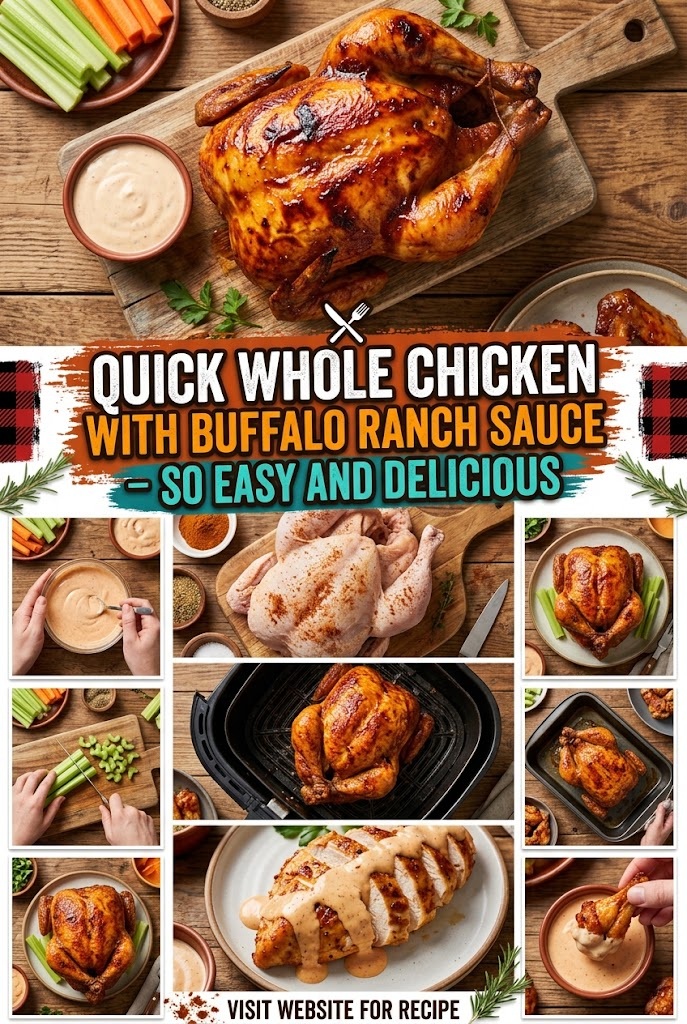
Quick Whole Chicken with Buffalo Ranch Sauce – So Easy and Delicious
The roast chicken is a cornerstone of home cooking. It is the culinary equivalent of a warm hug—reliable, comforting, and universally loved. However, for many busy families and home cooks, the traditional “Sunday Roast” feels like a commitment reserved for the weekend. The idea of waiting two hours for a bird to cook through can be a deterrent. But what if you could revolutionize this classic by adding a bold, American twist and cutting the cooking time in half?
Enter the Quick Whole Chicken with Buffalo Ranch Sauce. This isn’t just another chicken recipe; it is a flavor explosion that combines the zesty, spicy kick of Buffalo sauce with the cooling, herbal richness of ranch dressing. By utilizing modern techniques like spatchcocking and high-heat roasting, you can achieve a juicy, tender bird with skin so crispy it crackles, all in a fraction of the time.
In this comprehensive guide, we will explore everything from selecting the perfect bird to the science behind the Buffalo-Ranch emulsion, ensuring that your next dinner is nothing short of legendary.
Why This Recipe is a Game-Changer
Most whole chicken recipes rely on simple aromatics: lemon, garlic, and thyme. While delicious, they can become repetitive. The Buffalo Ranch variation taps into the “Zesty” profile that dominates American comfort food.
- The Flavor Profile: You get the acidic punch of vinegar from the hot sauce, the heat of cayenne, the creaminess of buttermilk (in the ranch), and the savory depth of garlic and onion powder.
- Efficiency: By focusing on the “Spatchcock” method, we increase the surface area of the chicken, allowing it to cook evenly and much faster than a trussed bird.
- Versatility: This dish works for a high-protein keto diet, a family dinner with sides, or even as the base for the world’s best meal-prep chicken.
The Anatomy of the Perfect Whole Chicken
To get the best results, you must start with a quality bird. Not all chickens are created equal. When walking through the poultry aisle, here is what you should look for:
1. Size Matters
For a “quick” roast, aim for a chicken between 3.5 and 4.5 pounds. A massive 6-pound roaster will take significantly longer to cook and is harder to spatchcock effectively. Smaller birds tend to be more tender and absorb the Buffalo Ranch marinade more deeply.
2. Air-Chilled vs. Water-Chilled
If your budget allows, always choose air-chilled chicken. Most commercial chickens are chilled in a water bath, which causes the meat to soak up excess water. This leads to “soggy” meat and prevents the skin from getting truly crispy. Air-chilled birds have a more concentrated chicken flavor and skin that roasts to a golden, parchment-like crispness.
3. Freshness Indicators
Check the skin color. It should be creamy white to light yellow, never gray or translucent. The flesh should be plump and spring back when touched.
Essential Tools for Success
Before we dive into the ingredients, ensure your kitchen is equipped for the task. You don’t need a professional kitchen, but a few specific tools make this “Quick” chicken actually quick.
- Poultry Shears: Essential for spatchcocking. If you don’t have these, a very sharp chef’s knife can work, but shears are safer and faster.
- A Large Cast-Iron Skillet or Rimmed Baking Sheet: Cast iron is incredible for heat retention, helping to sear the bottom of the chicken while the top roasts.
- Meat Thermometer: This is non-negotiable. To ensure the chicken is juicy (165°F in the breast, 175°F in the thigh), you need an instant-read thermometer.
- A Wire Cooling Rack: Placing the chicken on a rack inside the baking sheet allows hot air to circulate under the bird, ensuring the bottom isn’t soggy.
The Secret Technique: How to Spatchcock
The biggest barrier to a “quick” whole chicken is the cavity. A whole, intact chicken is a hollow sphere; the air inside the cavity takes a long time to heat up, meaning the outside often overcooks before the inside is safe to eat.
Spatchcocking (or butterflying) involves removing the backbone so the chicken can lay flat.
How to do it:
- Prep: Place the chicken breast-side down on a cutting board.
- Cut: Using your poultry shears, cut along one side of the backbone from the tail to the neck. Repeat on the other side.
- Remove: Take the backbone out (save it in the freezer for making bone broth later!).
- Flip and Flatten: Flip the chicken over so the skin side is up. Place your palms on the breastbone and press down firmly until you hear a “crack.” The chicken should now lie completely flat.
By doing this, you expose more skin to the heat and ensure the dark meat (thighs) and white meat (breasts) finish at roughly the same time.
The Buffalo Ranch Sauce: A Deep Dive
This sauce is the heart of the dish. While you can buy pre-made Buffalo Ranch, making it from scratch—or enhancing store-bought versions—elevates the meal.
The Science of the Sauce
Buffalo sauce is traditionally an emulsion of hot sauce (usually Frank’s RedHot) and melted butter. The fat in the butter mellows the acidity of the vinegar and carries the spice across the palate. Ranch adds a layer of herb-infused creaminess.
The Ultimate Buffalo Ranch Glaze Ingredients:
- 1/2 cup Buffalo Hot Sauce: Provides the vinegar kick and heat.
- 1/4 cup Melted Unsalted Butter: For richness and browning.
- 1/4 cup High-Quality Ranch Dressing: Look for one with real buttermilk and herbs like dill and chives.
- 1 tsp Smoked Paprika: Adds a subtle wood-fired flavor.
- 1 tbsp Honey or Brown Sugar: This is the “secret.” The sugar helps the sauce caramelize on the skin under the broiler.
Step-by-Step Recipe: Quick Buffalo Ranch Chicken
Ingredients
- 1 Whole Chicken (approx. 4 lbs), spatchcocked.
- 2 tbsp Avocado Oil or Grapeseed Oil (high smoke point oils are best).
- Dry Rub: 1 tsp Kosher salt, 1/2 tsp black pepper, 1 tsp garlic powder, 1 tsp onion powder.
- The Glaze: The Buffalo Ranch mixture mentioned above.
- Garnish: Fresh chives, chopped celery leaves, or a sprinkle of blue cheese crumbles.
Instructions
1. Dry Brining (The “Crispy Skin” Phase)
At least 30 minutes before cooking (or up to 24 hours), pat the chicken extremely dry with paper towels. Rub the dry rub (salt, pepper, garlic, onion) all over the skin and under the skin of the breast. Pro Tip: Salt draws out moisture. If you leave the salted chicken uncovered in the fridge for a few hours, the skin becomes translucent and tight—this is the key to professional-level crispiness.
2. Preheating
Preheat your oven to 425°F (218°C). High heat is essential for a quick cook time. If you use a lower temperature, the fat won’t render fast enough, and you’ll end up with rubbery skin.
3. The First Roast
Place the chicken skin-side up on your wire rack or cast-iron skillet. Drizzle with the oil. Roast for 30 to 35 minutes. At this stage, we are looking for the chicken to reach an internal temperature of about 145°F. We aren’t applying the sauce yet because the sugars in the Ranch and Buffalo sauce would burn at 425°F over a long period.
4. The Glazing Phase
Remove the chicken from the oven. Using a brush, generously coat the entire bird with your Buffalo Ranch sauce.
5. The Finish
Return the chicken to the oven for another 10 to 15 minutes. Watch it closely. The sauce should bubble and begin to darken into a rich, mahogany red. The internal temperature should hit 160°F in the breast (it will rise to 165°F while resting).
6. Resting (The Hardest Part)
Transfer the chicken to a carving board and let it rest for at least 10 minutes. If you cut into it immediately, all those delicious juices will run out onto the board, leaving you with dry meat. Resting allows the muscle fibers to relax and reabsorb the moisture.
The Art of the Side Dish
A Buffalo Ranch chicken is a bold centerpiece, so your sides should either complement the heat or provide a cooling contrast.
1. The Cooling Elements
- Classic Celery and Carrots: Mimic the experience of eating Buffalo wings by serving crunchy raw vegetables with a side of extra ranch for dipping.
- Cucumber Salad: A simple vinegar and sugar dressing with thinly sliced cucumbers and red onions provides a refreshing snap.
2. The Starchy Comforts
- Smashed Red Potatoes: Boil small potatoes until soft, smash them flat, drizzle with oil, and roast them in the same oven as the chicken. They will soak up any drippings.
- Blue Cheese Cornbread: Incorporating blue cheese crumbles into a slightly sweet cornbread creates a flavor profile that is quintessentially American.
3. The Green Balance
- Roasted Broccoli with Lemon: The acidity of the lemon cuts through the richness of the Ranch sauce.
- Charred Brussels Sprouts: Add some bacon bits and a drizzle of honey to match the sweet-heat of the chicken.
Secrets to the Crispiest Skin Ever
If you’ve ever wondered why restaurant chicken skin is so much better than home-cooked versions, it comes down to three things: Moisture, Fat, and Air.
- The Paper Towel Method: You cannot overstate the importance of drying the bird. If there is water on the skin, the oven’s energy goes into evaporating that water (steaming) rather than frying the skin (roasting).
- Baking Powder Hack: For ultimate crunch, mix 1/2 teaspoon of baking powder into your dry rub. The baking powder changes the pH level of the skin, breaking down the proteins and creating tiny bubbles that crisp up intensely.
- High Initial Heat: Starting at 425°F or even 450°F “shocks” the fat, causing it to render (melt) quickly. Once the fat renders, it essentially deep-fries the skin from the inside out.
Troubleshooting Common Chicken Problems
Problem: The breast is dry, but the thighs aren’t done.
- Solution: This is why we spatchcock! However, if it still happens, you can shield the breast with a small piece of aluminum foil halfway through the cook to slow down its temperature rise.
Problem: The sauce is burning.
- Solution: Your oven might have hotspots, or the sugar content in your ranch is high. Move the chicken to a lower rack or tent it loosely with foil.
Problem: The skin is soft.
- Solution: Next time, ensure the chicken is completely dry before oiling. Also, avoid “basting” with watery liquids. Use only oil or butter for the first 30 minutes.
Meal Prep and Leftovers: Maximizing Your Effort
One of the best things about roasting a whole chicken is the leftover potential. If you are cooking for one or two, this 4-lb bird is the gift that keeps on giving.
- Buffalo Chicken Tacos: Shred the leftover breast meat, toss with a little extra hot sauce, and serve in charred tortillas with avocado and slaw.
- The Ultimate Buffalo Ranch Salad: Cold shredded chicken over romaine lettuce, with black beans, corn, tortilla strips, and a drizzle of ranch.
- Buffalo Chicken Pasta: Stir shredded chicken into a creamy alfredo sauce with a dash of Buffalo sauce for a “spicy alfredo” experience.
- Don’t Throw the Bones Away: Even though the chicken was roasted in Buffalo Ranch sauce, the bones still make excellent stock. The slight hint of spice and garlic in the marrow adds a unique depth to soups and stews.
Nutritional Benefits
Chicken is an incredible source of lean protein, essential for muscle repair and metabolic health.
- Lean Protein: The breast meat is exceptionally low in fat and high in protein.
- Collagen: Roasting a chicken with the skin and connective tissue intact provides natural collagen, which is beneficial for joint health and skin elasticity.
- Controlled Ingredients: By making your Buffalo Ranch sauce at home, you avoid the high-fructose corn syrup and excessive preservatives found in many bottled “wing sauces.”
Elevating the Dish: Gourmet Variations
Once you’ve mastered the basic Quick Whole Chicken with Buffalo Ranch, try these variations to keep your menu exciting:
1. The “Blue Fire” Roast
Mix 1/4 cup of crumbled gorgonzola or blue cheese into the ranch portion of your glaze. As it roasts, the cheese will melt into the sauce, creating a pungent, savory crust that is traditional to the Buffalo flavor profile.
2. Honey-Garlic Buffalo
Add 3 cloves of minced garlic and 2 extra tablespoons of honey to the sauce. This creates a “sticky” wing-style coating that is less creamy and more of a glaze.
3. The Smoked Version
If you have a pellet grill or smoker, follow the same spatchcock instructions but smoke the bird at 300°F until it reaches 145°F, then crank the heat to 450°F and apply the glaze. The addition of wood smoke (hickory or applewood) takes the Buffalo Ranch flavor to a whole new dimension.
Frequently Asked Questions
Can I use a frozen chicken?
Technically yes, but it must be fully thawed. Roasting a partially frozen chicken will result in uneven cooking—the outside will be dry and burnt while the inside remains raw. Thaw it in the refrigerator for 24–48 hours for best results.
Is this recipe too spicy for kids?
The beauty of the “Ranch” component is that it significantly tempers the heat of the Buffalo sauce. If you have sensitive palates in the house, use a “Mild” Buffalo sauce or increase the ratio of Ranch to Hot Sauce (e.g., 3 parts Ranch to 1 part Hot Sauce).
Can I make this in an Air Fryer?
Absolutely! If your air fryer is large enough to hold a flattened chicken, it is actually one of the best ways to cook it. Set the air fryer to 375°F. It will likely cook in 30–40 minutes total. Just be sure to glaze it only in the last 5-10 minutes.
Do I have to use Frank’s RedHot?
While Frank’s is the “authentic” choice for Buffalo flavor, you can use any cayenne-based vinegar sauce. Crystal or Texas Pete also work very well. Avoid “Sriracha” for this specific recipe, as its flavor profile (garlic/chili/sugar) is quite different from the traditional Buffalo tang.
The Cultural Significance of Buffalo and Ranch
To truly appreciate this dish, it’s fun to look at why these two flavors became an American obsession. Buffalo sauce originated in 1964 at the Anchor Bar in Buffalo, New York. It was a late-night invention that turned discarded chicken wings into a national delicacy.
Ranch dressing, on the other hand, was created in the 1950s by Steve Henson at Hidden Valley Ranch in California. It became the perfect cooling companion to the spicy Buffalo wing in the 1980s. By combining them into a glaze for a whole chicken, we are essentially taking the best of American snack culture and elevating it to a wholesome, family-style dinner.
Conclusion: Your New Go-To Dinner
The Quick Whole Chicken with Buffalo Ranch Sauce proves that you don’t have to sacrifice flavor for speed. By embracing the spatchcock method and utilizing the high-heat roasting technique, you can serve a meal that looks and tastes like it took hours of preparation.
The combination of the spicy, vinegary Buffalo kick and the cool, creamy herbiness of the Ranch creates a profile that is addictive and satisfying. Whether you’re hosting a game day dinner, prepping meals for the week, or just looking to break out of a “boring chicken” rut, this recipe is your ticket to culinary success.
So, grab your poultry shears, fire up the oven, and get ready to enjoy the juiciest, most flavorful chicken you’ve ever made. The aroma alone will have your neighbors knocking on your door, and the taste will keep your family asking for it week after week. Happy roasting!