Grilled Chicken Tarragon (French)
Grilled Chicken Tarragon (French)
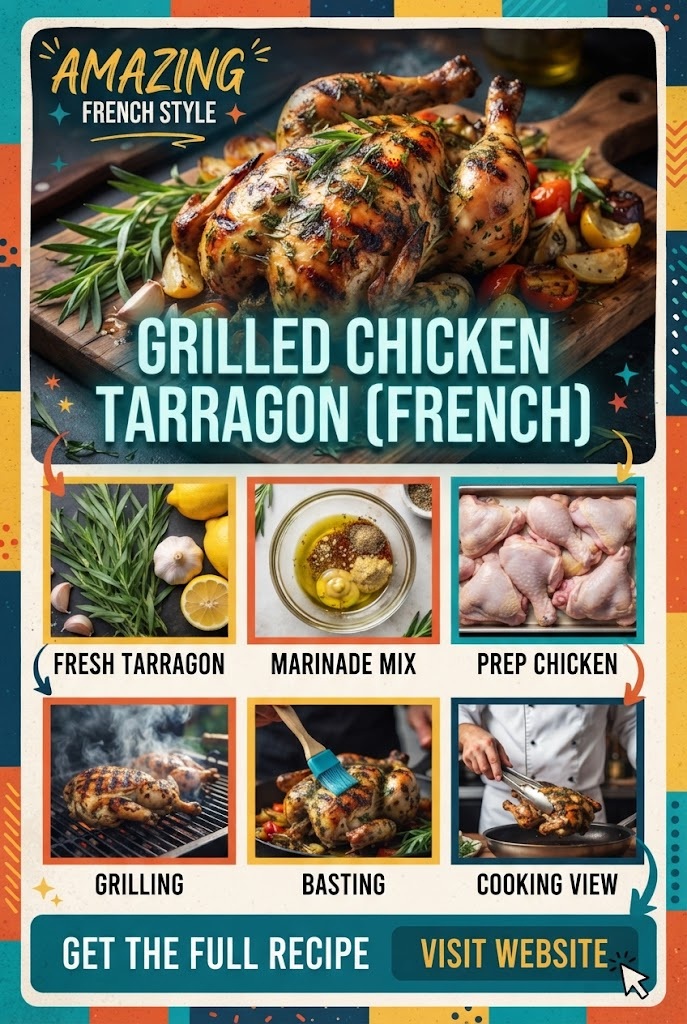
Grilled Chicken Tarragon is a simple yet elegant French-inspired dish that combines juicy grilled chicken with the fresh, slightly sweet, anise-like flavor of tarragon. A bright marinade made with lemon, garlic, olive oil, Dijon mustard, and fresh herbs helps tenderize the chicken while building layers of flavor. The result is golden, lightly charred chicken that is flavorful enough for a dinner party but easy enough for a weeknight meal.
This recipe works especially well with boneless, skinless chicken breasts or thighs. The chicken can be marinated ahead of time, grilled outdoors or cooked on a grill pan, and finished with a creamy or non-creamy tarragon sauce. Serve it with roasted potatoes, green beans, asparagus, rice, or a crisp French-style salad for a complete meal.
Why You’ll Love This Grilled Chicken Tarragon
There are plenty of reasons to make this recipe part of your regular dinner rotation.
First, it has a wonderful balance of flavors. Tarragon brings a distinctive herbal character, while lemon adds brightness. Garlic provides savory depth, Dijon mustard contributes gentle tanginess, and olive oil helps the chicken stay moist during grilling.
Second, the recipe is flexible. You can use chicken breasts when you want a leaner meal or chicken thighs when you prefer richer, juicier meat. You can also adjust the amount of tarragon according to your preference.
Most importantly, grilling adds smoky, caramelized edges that make the chicken taste far more complicated than the preparation suggests.
Complete Recipe at a Glance
Recipe: Grilled Chicken Tarragon
Cuisine: French-inspired
Course: Main Course
Preparation Time: 15 minutes
Marinating Time: 30 minutes to 4 hours
Cooking Time: 12–18 minutes
Total Active Time: About 30 minutes
Servings: 4
Difficulty: Easy to moderate
Ingredients
For the Chicken
- 4 boneless, skinless chicken breasts, about 6–7 ounces each
- 3 tablespoons extra-virgin olive oil
- 2 tablespoons fresh lemon juice
- 1 tablespoon Dijon mustard
- 2 cloves garlic, finely minced
- 1 tablespoon fresh tarragon, finely chopped
- 1 teaspoon dried tarragon, optional
- 1 teaspoon honey
- 1 teaspoon kosher salt
- ½ teaspoon freshly ground black pepper
- ½ teaspoon paprika
- ¼ teaspoon onion powder
- 1 tablespoon chopped fresh parsley, optional
- 1 teaspoon finely grated lemon zest
Optional Tarragon Finishing Sauce
- ½ cup heavy cream
- ½ cup chicken broth
- 1 tablespoon Dijon mustard
- 1 tablespoon fresh tarragon, chopped
- 1 tablespoon finely chopped shallot
- 1 tablespoon butter
- 1 teaspoon lemon juice
- ¼ teaspoon black pepper
- Salt to taste
For Garnishing
- Fresh tarragon leaves
- Fresh parsley
- Lemon wedges
- A small drizzle of extra-virgin olive oil
Ingredient Details and Substitutions
Chicken
Boneless, skinless chicken breasts are ideal because they cook quickly and absorb the marinade well. If your chicken breasts are very thick, pound them gently to an even thickness before marinating.
Chicken thighs are another excellent option. They contain more fat than breasts and are naturally forgiving on the grill.
If using bone-in chicken, increase the cooking time and rely on an internal temperature rather than a specific number of minutes.
Fresh Tarragon
Fresh tarragon is the star ingredient. It has a delicate flavor often described as slightly sweet, herbal, and reminiscent of anise or licorice.
Fresh tarragon gives the best flavor, but dried tarragon can be used when necessary. Because dried herbs are more concentrated, use less than you would fresh.
Dijon Mustard
Dijon mustard adds acidity and savory depth without making the chicken taste strongly of mustard. It also helps the marinade cling to the chicken.
Lemon
Lemon juice provides acidity and freshness, while lemon zest adds aromatic citrus flavor.
Olive Oil
Olive oil carries the flavors of the herbs and spices while helping the chicken brown on the grill.
Honey
A small amount of honey balances the acidity of the lemon and mustard. It also helps the chicken develop beautiful caramelized grill marks.
How to Prepare the Chicken
Start by preparing the chicken.
If the chicken breasts are unevenly thick, place them between two sheets of plastic wrap or parchment paper. Using the flat side of a meat mallet, gently pound the thickest areas until each breast is approximately the same thickness.
Do not pound the chicken aggressively. The goal is simply to create an even surface so that the chicken cooks at the same rate.
Pat the chicken dry with paper towels.
This small step is important because excess surface moisture can interfere with browning.
How to Make the Tarragon Marinade
In a medium bowl, combine:
- Olive oil
- Lemon juice
- Dijon mustard
- Minced garlic
- Fresh tarragon
- Honey
- Salt
- Black pepper
- Paprika
- Onion powder
- Lemon zest
Whisk everything together until the marinade becomes relatively smooth.
Taste a tiny amount before adding the raw chicken. It should taste bright, slightly tangy, herbaceous, and savory.
If you want stronger tarragon flavor, add another teaspoon of chopped fresh tarragon.
How to Marinate the Chicken
Place the chicken in a large resealable food bag or shallow baking dish.
Pour the marinade over the chicken.
Turn each piece several times so that the marinade coats every surface.
Cover the dish or seal the bag and refrigerate.
For the best flavor, marinate the chicken for 30 minutes to 4 hours.
You do not need to marinate it overnight. Because the marinade contains lemon juice, excessively long marinating can negatively affect the texture of the chicken.
For a quick dinner, even 30 minutes will make a noticeable difference.
Preparing the Grill
About 15–20 minutes before cooking, remove the chicken from the refrigerator.
Preheat your grill to medium-high heat, approximately 400–450°F (200–230°C).
Clean the grill grates thoroughly.
Lightly oil the grates using a high-smoke-point cooking oil and a paper towel held with long tongs. Never pour oil directly onto a hot flame.
The grill should be hot before the chicken touches the grates.
A properly heated grill helps prevent sticking and creates attractive seared grill marks.
How to Grill Chicken Tarragon
Remove the chicken from the marinade.
Allow excess marinade to drip away.
Do not brush leftover marinade onto cooked chicken unless it has first been boiled thoroughly. Raw chicken marinade can contain harmful bacteria.
Place the chicken directly onto the hot grill.
Close the lid.
Cook the first side for approximately 5–7 minutes, depending on thickness.
Avoid constantly moving the chicken. Let it remain undisturbed long enough for the surface to develop grill marks.
After the first side has browned, turn the chicken using tongs.
Cook the second side for another 5–7 minutes.
If the chicken begins browning too quickly while the center is still undercooked, move it to a cooler part of the grill and continue cooking with the lid closed.
Checking for Doneness
The safest and most reliable way to determine whether chicken is cooked is with an instant-read thermometer.
Insert the thermometer into the thickest part of the chicken.
The chicken should reach an internal temperature of 165°F (74°C).
Do not judge doneness solely by color.
Once the chicken reaches the appropriate temperature, remove it from the grill.
Place it on a clean plate or cutting board.
Resting the Chicken
Allow the grilled chicken to rest for approximately 5 minutes before slicing.
Resting gives the juices time to redistribute throughout the meat.
If you slice immediately, more of the juices can escape onto the cutting board.
After resting, slice the chicken against the grain.
Arrange the slices on a serving platter and garnish with fresh tarragon, parsley, and lemon wedges.
Optional Creamy Tarragon Sauce
For an especially luxurious French-inspired presentation, prepare a quick creamy tarragon sauce.
Melt butter in a small saucepan over medium heat.
Add the finely chopped shallot.
Cook for approximately 2–3 minutes, stirring frequently, until softened.
Add the chicken broth and Dijon mustard.
Whisk well.
Simmer for several minutes until slightly reduced.
Lower the heat and add the heavy cream.
Stir gently and allow the sauce to simmer until it thickens slightly.
Do not boil aggressively after adding the cream.
Stir in fresh tarragon and lemon juice.
Taste and season with salt and black pepper.
Spoon the sauce over the grilled chicken immediately before serving.
Detailed Cooking Method
Step 1: Prepare the Chicken
Trim away excess fat or unwanted connective tissue.
If using breasts, pound them gently to an even thickness.
Pat dry.
Step 2: Make the Marinade
Whisk olive oil, lemon juice, Dijon mustard, garlic, tarragon, honey, lemon zest, salt, pepper, paprika, and onion powder together.
Step 3: Coat the Chicken
Place chicken into the marinade and turn until completely coated.
Step 4: Refrigerate
Cover and refrigerate for 30 minutes to 4 hours.
Step 5: Preheat the Grill
Heat the grill to approximately 400–450°F.
Clean and lightly oil the grates.
Step 6: Grill
Place chicken on the grill.
Cook for 5–7 minutes on the first side.
Turn and cook another 5–7 minutes, adjusting the time according to thickness.
Step 7: Check Temperature
Use a thermometer and make sure the thickest part reaches 165°F.
Step 8: Rest
Remove from the grill and rest for 5 minutes.
Step 9: Slice
Cut the chicken against the grain.
Step 10: Serve
Garnish with fresh herbs and lemon.
Add creamy tarragon sauce if desired.
How to Get Perfect Grill Marks
Beautiful grill marks are easy to achieve when you follow a few basic principles.
First, make sure the grill is fully preheated.
Second, make sure the chicken surface isn’t excessively wet. After removing it from the marinade, allow excess liquid to drip off.
Third, place the chicken onto the grates and leave it alone.
Moving the chicken too often prevents strong searing.
For classic crosshatch marks, cook the chicken on one side for several minutes, rotate it approximately 45 degrees, and continue cooking briefly before flipping.
However, attractive grill marks are not more important than properly cooked chicken, so always prioritize internal temperature.
Grilled Chicken Tarragon on a Grill Pan
You don’t need an outdoor grill to make this recipe.
A heavy cast-iron grill pan works very well.
Heat the grill pan over medium-high heat for several minutes.
Lightly oil the surface.
Place the marinated chicken onto the hot pan.
Cook without moving for approximately 5–7 minutes.
Turn and continue cooking until the chicken reaches 165°F internally.
If the pan becomes smoky, reduce the heat slightly.
Because indoor grill pans can become very hot, make sure your kitchen is well ventilated.
How to Prevent Dry Chicken
Dry chicken is usually caused by overcooking rather than insufficient marinade.
The best approach is to monitor the internal temperature carefully.
Chicken breasts are particularly lean, so they can quickly go from juicy to dry.
Pounding them to an even thickness helps tremendously.
Another useful technique is to remove them from the grill as soon as they reach the recommended safe internal temperature.
Finally, allow the chicken to rest before slicing.
Best Side Dishes
Grilled Chicken Tarragon pairs beautifully with a wide range of side dishes.
Roasted Potatoes
Crispy roasted potatoes provide a satisfying contrast to the tender chicken.
Toss potatoes with olive oil, salt, pepper, garlic, and herbs before roasting until golden.
Green Beans
Simply steamed or sautéed green beans work wonderfully with the fresh tarragon flavor.
Finish them with lemon juice and a little butter.
Asparagus
Grilled asparagus is particularly good because it can cook alongside the chicken.
Season with olive oil, salt, pepper, and lemon.
Rice
Steamed white rice, brown rice, or herbed rice provides a simple foundation for the chicken and sauce.
French-Style Green Salad
A crisp salad with mixed greens, cucumber, radishes, and a Dijon vinaigrette keeps the meal light.
Crusty Bread
A loaf of crusty French bread is excellent when serving the creamy tarragon sauce.
Serving Ideas
For a casual family dinner, place whole grilled chicken breasts on a platter and surround them with roasted vegetables.
For a more elegant presentation, slice the chicken diagonally and arrange it slightly overlapping on individual plates.
Drizzle a small amount of tarragon sauce over the chicken rather than completely covering it.
Add a few fresh tarragon leaves and a lemon wedge.
A sprinkle of chopped parsley adds color and freshness.
Variations
Grilled Tarragon Chicken Thighs
Replace chicken breasts with boneless, skinless chicken thighs.
Thighs generally remain juicy and flavorful even if they cook slightly longer.
Garlic Tarragon Chicken
Increase the garlic to 3–4 cloves for a stronger savory flavor.
Lemon Tarragon Chicken
Increase the lemon zest and add a little extra lemon juice immediately before serving.
Honey Tarragon Chicken
Increase the honey slightly for a sweeter glaze.
Be careful because sugary marinades can burn over very high heat.
Creamy Mushroom Tarragon Chicken
Add sautéed mushrooms to the creamy tarragon sauce.
The earthy mushrooms pair exceptionally well with tarragon.
Spicy Tarragon Chicken
Add a pinch of red pepper flakes or a small amount of cayenne to the marinade.
This creates a pleasant contrast with the sweet herbal tarragon.
Make-Ahead Instructions
You can prepare the marinade several hours in advance.
The chicken can also be marinated earlier on the same day.
For best food safety, keep raw chicken refrigerated until you’re ready to cook it.
You can prepare the creamy tarragon sauce shortly before serving.
If making the sauce ahead of time, refrigerate it and gently reheat it over low heat. Add a small splash of chicken broth or cream if necessary to loosen the consistency.
Storage Instructions
Allow leftover chicken to cool and place it in an airtight container.
Refrigerate within two hours of cooking.
Properly refrigerated cooked chicken is generally best consumed within 3–4 days.
For longer storage, freeze the cooked chicken in an airtight freezer-safe container or tightly wrapped freezer bag.
Frozen cooked chicken is best used within a few months for quality.
How to Reheat Leftovers
The microwave is convenient but can quickly dry out chicken.
For better results, place the chicken in a covered skillet with a small splash of chicken broth or water.
Heat gently over medium-low heat until warmed through.
You can also reheat it in a covered oven-safe dish at approximately 300°F.
Avoid overheating.
Common Mistakes to Avoid
Using Too Much Lemon Juice
Lemon adds excellent flavor, but too much acid or an excessively long marinade can affect the texture of chicken.
Grilling Over Excessively High Heat
Very high heat can burn the exterior while leaving the center undercooked.
Medium-high heat is generally more manageable.
Constantly Flipping the Chicken
Give the chicken enough time to sear before turning.
Cutting Into the Chicken Repeatedly
Using a thermometer is better than repeatedly cutting the chicken to check whether it is done.
Skipping the Resting Period
Allow the chicken to rest for several minutes before slicing.
Using the Raw Marinade as a Sauce
Never serve raw chicken marinade directly as a sauce. If you want to use it, boil it thoroughly first.
Frequently Asked Questions
Can I use dried tarragon?
Yes. Fresh tarragon provides a brighter flavor, but dried tarragon works well. Start with a smaller amount because dried herbs are more concentrated.
Can I use chicken thighs?
Absolutely. Chicken thighs are excellent for grilling and tend to remain particularly juicy.
How long should I marinate chicken?
About 30 minutes to 4 hours is a practical range for this lemon-based marinade.
Can I cook this chicken without a grill?
Yes. A grill pan or heavy skillet can be used indoors.
Can I prepare the chicken ahead of time?
Yes. Marinate the chicken earlier in the day and keep it refrigerated until you’re ready to grill.
What temperature should grilled chicken reach?
The thickest part should reach 165°F (74°C) for safe consumption.
What does tarragon taste like?
Tarragon has a distinctive herbal flavor with subtle sweet, peppery, and anise-like notes.
Can I leave out the honey?
Yes. Honey is optional. It provides balance and encourages browning, but the chicken will still be delicious without it.
Nutritional Notes
Exact nutrition will depend on the size of the chicken breasts, the amount of marinade consumed, and whether you serve the creamy sauce.
Chicken breast provides a substantial amount of protein while remaining relatively lean. Olive oil contributes unsaturated fat, while fresh herbs and lemon add flavor without requiring large amounts of salt or heavy seasoning.
If you want a lighter version, omit the cream sauce and serve the grilled chicken with steamed vegetables and a fresh salad.
For a richer dinner, keep the creamy tarragon sauce and serve it with roasted potatoes or crusty bread.
Tips for the Best Grilled Chicken Tarragon
Use fresh tarragon when possible. Its delicate aroma makes the dish distinctive.
Don’t over-marinate. A few hours is enough.
Pound thick chicken breasts evenly. This promotes uniform cooking.
Preheat the grill properly. A hot grill gives better browning and helps prevent sticking.
Use a thermometer. It is the most reliable way to determine doneness.
Rest the chicken. Five minutes makes a noticeable difference in juiciness.
Add fresh herbs at the end. Fresh tarragon provides a brighter finishing flavor than herbs exposed to prolonged high heat.
Balance the richness. If serving the creamy sauce, pair the meal with vegetables or a crisp salad.
Complete Printable Recipe
Grilled Chicken Tarragon (French)
Serves: 4
Ingredients
- 4 boneless, skinless chicken breasts
- 3 tablespoons olive oil
- 2 tablespoons lemon juice
- 1 tablespoon Dijon mustard
- 2 garlic cloves, minced
- 1 tablespoon fresh chopped tarragon
- 1 teaspoon honey
- 1 teaspoon lemon zest
- 1 teaspoon kosher salt
- ½ teaspoon black pepper
- ½ teaspoon paprika
- ¼ teaspoon onion powder
- Fresh parsley, optional
- Lemon wedges, for serving
Instructions
- Pat the chicken dry. If the breasts are thick or uneven, gently pound them to an even thickness.
- In a bowl, whisk together olive oil, lemon juice, Dijon mustard, garlic, tarragon, honey, lemon zest, salt, pepper, paprika, and onion powder.
- Place the chicken in a shallow dish or resealable bag.
- Pour the marinade over the chicken and turn to coat completely.
- Refrigerate for 30 minutes to 4 hours.
- Preheat the grill to approximately 400–450°F.
- Remove the chicken from the marinade and let excess marinade drip away.
- Place chicken on the hot grill.
- Grill for approximately 5–7 minutes on the first side.
- Turn the chicken and grill another 5–7 minutes, adjusting the cooking time according to thickness.
- Check the thickest portion with an instant-read thermometer.
- Remove the chicken when it reaches 165°F internally.
- Rest for approximately 5 minutes.
- Slice against the grain.
- Garnish with fresh tarragon, parsley, and lemon wedges.
- Serve immediately with your favorite vegetables, potatoes, rice, salad, or optional creamy tarragon sauce.
Final Thoughts
Grilled Chicken Tarragon is a wonderful example of how a handful of simple ingredients can create an elegant meal. The combination of tender chicken, aromatic tarragon, bright lemon, Dijon mustard, garlic, and olive oil creates a balanced French-inspired flavor that feels both fresh and comforting.
The recipe is versatile enough for everyday cooking but attractive enough for entertaining. You can keep it light by serving the chicken with vegetables and salad, or make it more indulgent with creamy tarragon sauce, roasted potatoes, and crusty bread.
The key to success is simple: prepare the chicken evenly, don’t over-marinate it, preheat the grill properly, cook until the chicken reaches 165°F (74°C), and allow it to rest before slicing.
Once you master this basic method, Grilled Chicken Tarragon can become a dependable signature chicken recipe—fresh, flavorful, beautifully grilled, and easy to customize for almost any occasion.