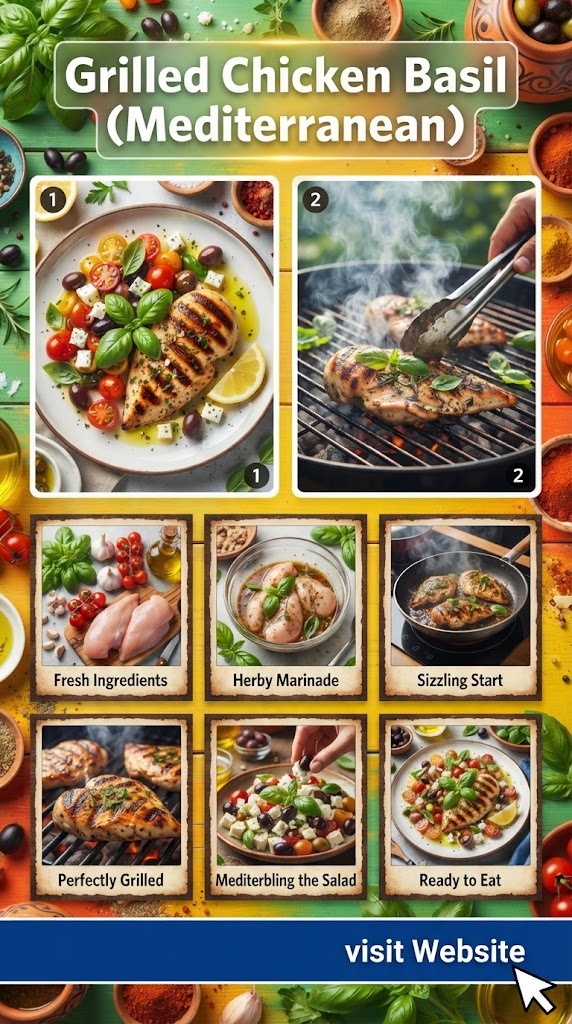
Grilled Chicken Basil (Mediterranean)
he Mediterranean diet has long been hailed as the gold standard of healthy living, celebrated by nutritionists and foodies alike for its vibrant colors, heart-healthy fats, and emphasis on fresh, seasonal ingredients. At the heart of this culinary philosophy lies a dish that embodies the spirit of the sun-drenched coastlines of Greece, Italy, and Southern France: Grilled Chicken Basil.
This isn’t just another chicken recipe. It is a symphony of aromatic herbs, zesty citrus, and the smoky char of a perfectly fired grill. Whether you are a seasoned pitmaster or a home cook looking to elevate your weeknight dinner rotation, mastering Mediterranean Grilled Chicken Basil is a transformative experience. In this comprehensive guide, we will dive deep into the science of the marinade, the secrets of the grill, and the nutritional powerhouse that makes this dish a staple of the world’s healthiest regions.
The Philosophy of Mediterranean Cooking
To truly understand Grilled Chicken Basil, one must first understand the Mediterranean approach to food. It is less about strict rules and more about the quality of the ingredients. In the Mediterranean, a meal is a celebration of the earth’s bounty.
- Freshness is Non-Negotiable: The basil should be vibrant green, the lemons heavy with juice, and the olive oil smelling of crushed olives and grass.
- Simplicity is Key: You don’t need fifty ingredients to make a world-class dish. When you have high-quality protein and fresh herbs, the flavors speak for themselves.
- Balance of Elements: Every dish seeks a balance between fat (olive oil), acid (lemon or vinegar), salt, and aromatics (basil and garlic).
The Anatomy of the Perfect Basil Marinade
The marinade is where the magic happens. Unlike thick, sugary barbecue sauces that sit on top of the meat, a Mediterranean marinade penetrates the fibers of the chicken, tenderizing it and infusing it with flavor from the inside out.
1. The Role of Extra Virgin Olive Oil (EVOO)
In Mediterranean cooking, olive oil is not just a cooking medium; it is a primary flavoring agent. For Grilled Chicken Basil, use a high-quality, cold-pressed EVOO. The fats in the oil act as a carrier for the fat-soluble compounds in the basil and garlic, ensuring that every bite is infused with their essence.
2. The Brightness of Citrus
Lemon juice serves two purposes. First, the acidity cuts through the richness of the oil and the protein. Second, the acid begins to break down the tough connective tissues in the chicken, ensuring a succulent, tender result. For an extra punch of flavor, always include the lemon zest; that’s where the essential oils live.
3. The Star Ingredient: Fresh Basil
Basil is the “King of Herbs.” In Mediterranean cuisine, specifically the “Basilico Genovese” variety, it offers a sweet, peppery, and slightly minty profile. When chopped or bruised, basil releases enzymes that create that unmistakable summer aroma. For this recipe, fresh basil is mandatory—dried basil simply cannot replicate the bright, herbaceous notes required for this dish.
4. Aromatics and Spices
- Garlic: Freshly minced garlic provides a pungent depth that mellows out during the grilling process.
- Sea Salt and Cracked Black Pepper: These are the fundamental flavor enhancers.
- Optional Kick: A pinch of red pepper flakes can add a subtle “back-of-the-throat” heat that complements the sweetness of the basil.
Selecting the Right Cut of Chicken
Not all chicken is created equal. Depending on your preference for texture and fat content, your choice of cut will dictate your grilling strategy.
The Chicken Breast (The Lean Choice)
The most popular choice for the health-conscious. Chicken breasts are high in protein and low in fat. However, they are prone to drying out. To prevent this, Mediterranean chefs often butterfly the breast (slicing it thin) or pound it to an even thickness to ensure quick, even cooking.
The Chicken Thigh (The Flavor Choice)
If you prioritize juiciness and flavor, the boneless, skinless chicken thigh is the way to go. Thighs have a higher fat content and more connective tissue, making them much more forgiving on the grill. They stay moist even if they stay on the heat a minute too long.
The Bone-In, Skin-On Option
For the most traditional experience, use bone-in, skin-on pieces. The bone acts as an insulator, keeping the meat moist, while the skin renders down into a crispy, salty treat that carries the basil flavor beautifully.
The Science of Grilling: Achieving the Perfect Char
Grilling is more than just applying heat; it’s a chemical process known as the Maillard Reaction. This is the reaction between amino acids and reducing sugars that gives browned food its distinctive flavor.
Step 1: Preheating and Cleaning
A common mistake is putting chicken on a cold or dirty grill. Preheat your grill to medium-high (about 400°F to 450°F). Use a wire brush to clean the grates. A clean grate prevents sticking and ensures those beautiful, professional-looking grill marks.
Step 2: The Two-Zone Fire
Whether using charcoal or gas, create two zones: a “hot zone” for searing and a “cool zone” for indirect cooking. Start the chicken on the hot zone to develop a crust, then move it to the cool zone to finish cooking through without burning the exterior.
Step 3: Temperature Control
Invest in a high-quality meat thermometer. For chicken, the USDA recommends an internal temperature of 165°F (74°C). However, many chefs pull the chicken at 160°F and let the carry-over cooking bring it to 165°F while it rests.
Step-by-Step Recipe: Signature Mediterranean Grilled Chicken Basil
Ingredients
- 2 lbs Chicken Breast or Thighs
- 1 cup Fresh Basil Leaves (packed)
- 1/2 cup Extra Virgin Olive Oil
- 3 cloves Garlic, smashed and minced
- Juice and Zest of 1 large Lemon
- 1 tsp Sea Salt
- 1/2 tsp Freshly Ground Black Pepper
- 1/2 tsp Red Pepper Flakes (optional)
Instructions
- Prepare the Herb Paste: In a food processor or mortar and pestle, combine the basil, garlic, lemon zest, salt, and pepper. Pulse or grind until a coarse paste forms. Slowly drizzle in the olive oil while continuing to mix.
- Marinate: Place the chicken in a large glass bowl or a resealable plastic bag. Pour the basil mixture over the chicken, ensuring every piece is thoroughly coated. Add the lemon juice last (adding it too early can “cook” the chicken with acid, changing the texture).
- Chill: Let the chicken marinate in the refrigerator for at least 30 minutes, but no longer than 4 hours. Over-marinating in citrus can make the chicken mushy.
- Temper the Meat: Take the chicken out of the fridge 15-20 minutes before grilling. Bringing the meat closer to room temperature ensures even cooking.
- Grill: Place the chicken on the preheated grates. For breasts, grill for 5-7 minutes per side. For thighs, grill for 8-10 minutes per side.
- The Flip: Only flip the chicken once. If the meat sticks to the grate, it’s not ready to be flipped. It will naturally release once the sear is formed.
- Rest: This is the most forgotten but most important step. Transfer the chicken to a cutting board and tent it loosely with foil. Let it rest for 5-10 minutes. This allows the juices to redistribute, ensuring the meat is moist when you bite into it.
Perfect Mediterranean Side Dish Pairings
Grilled Chicken Basil is a versatile protein that pairs beautifully with a variety of sides that follow the Mediterranean theme.
1. Lemon Herb Orzo
Orzo is a rice-shaped pasta that is a staple in Greek cooking. Toss it with butter, more fresh basil, and some feta cheese for a filling accompaniment.
2. Roasted Mediterranean Vegetables
Toss zucchini, bell peppers, red onions, and cherry tomatoes in olive oil and balsamic vinegar. Roast them until caramelized. The sweetness of the roasted vegetables perfectly offsets the savory chicken.
3. The Classic Greek Salad (Horiatiki)
A refreshing mix of cucumbers, tomatoes, Kalamata olives, red onion, and a thick slab of feta cheese. The acidity of the salad dressing cleanses the palate between bites of the smoky chicken.
4. Quinoa or Tabbouleh
For a high-fiber option, serve the chicken over a bed of quinoa or traditional tabbouleh (made with bulgur wheat, parsley, and mint).
Nutritional Benefits: Why This Dish is a Superfood
The Mediterranean Grilled Chicken Basil isn’t just delicious; it’s a nutritional powerhouse. Here is a breakdown of why this meal supports a healthy lifestyle:
- Lean Protein: Chicken provides the essential amino acids needed for muscle repair and metabolic health without the high saturated fat content of red meat.
- Heart-Healthy Monounsaturated Fats: Olive oil is rich in oleic acid, which has been shown to reduce inflammation and have beneficial effects on genes linked to cancer.
- Antioxidant-Rich Basil: Basil contains powerful antioxidants like orientin and viceninare, which help protect cells from oxidative stress. It also has antimicrobial properties.
- Vitamin C: The fresh lemon juice provides a boost to the immune system and aids in the absorption of iron from other foods.
- Low Glycemic Index: This meal is naturally low in refined carbohydrates, making it an excellent choice for blood sugar management and sustained energy.
Variations to Keep It Interesting
Once you have mastered the basic recipe, you can experiment with these Mediterranean-inspired variations:
- The Creamy Pesto Version: After grilling, top the chicken with a dollop of fresh basil pesto and a slice of melted fresh mozzarella.
- The Balsamic Glaze: Drizzle a thick balsamic reduction over the finished chicken for a sweet and tangy finish.
- The Sun-Dried Tomato Twist: Add chopped sun-dried tomatoes to the marinade for an intense, concentrated tomato flavor that pairs perfectly with basil.
- The Spicy Calabrian Style: Incorporate Calabrian chili paste into the marinade for a fiery Southern Italian take on the dish.
Common Mistakes to Avoid
Even the best cooks can run into trouble. Avoid these pitfalls to ensure your Grilled Chicken Basil is a success:
- Using Dried Basil: As mentioned, dried basil has a completely different flavor profile (more hay-like). Stick to fresh for this recipe.
- Flare-ups on the Grill: Olive oil can cause flare-ups if it drips onto the coals. If this happens, move the chicken to the “cool zone” until the flames subside.
- Crowding the Pan/Grill: If you put too many pieces of chicken on the grill at once, the temperature will drop, and the chicken will steam rather than sear. Give each piece space.
- Slicing Too Soon: If you cut into the chicken immediately after taking it off the grill, all the juices will run out onto the board, leaving you with dry meat.
Meal Prepping and Storage
Grilled Chicken Basil is a meal-prepper’s dream. It holds up exceptionally well and can be used in numerous ways throughout the week.
- Storage: Store leftovers in an airtight container in the refrigerator for up to 4 days.
- Freezing: You can freeze the marinated (uncooked) chicken for up to 3 months. When you’re ready to eat, thaw it in the fridge overnight and grill as usual.
- Leftover Ideas:
- Mediterranean Wraps: Slice the cold chicken and put it in a pita with hummus and spinach.
- Basil Chicken Salad: Mix chopped chicken with a little Greek yogurt, lemon, and celery for a healthy chicken salad.
- Pasta Night: Toss sliced chicken into a bowl of penne with a light garlic and oil sauce.
The Cultural Significance of Basil in the Mediterranean
In Italy, basil is a symbol of love. In Greece, it is known as the “holy herb.” Historically, it was believed that basil could only be sown while shouting and cursing to ensure its growth, though today we know it simply needs plenty of sunlight and well-drained soil.
Integrating basil into your cooking connects you to thousands of years of culinary tradition. When you smell that fresh basil hitting the hot chicken on the grill, you are experiencing a scent that has wafted through Mediterranean kitchens for generations.
Expert Tips for the “Google-Ranked” Home Chef
To truly take this dish to the professional level, consider these “insider” tips:
- The “Sizzling” Herb Brush: Instead of a silicone brush, tie a bundle of fresh basil together and use it to brush extra marinade or olive oil onto the chicken while it grills. This infuses even more aromatic oils into the meat.
- Brining (The Pro Move): If you have extra time, soak your chicken in a simple saltwater brine for 30 minutes before marinating. This seasons the meat deeply and helps it retain moisture during the high-heat grilling process.
- The Charred Lemon Finish: Cut a lemon in half and place it cut-side down on the grill for 2-3 minutes. The sugars will caramelize, making the juice sweeter and adding a smoky complexity when squeezed over the finished chicken.
Conclusion
Mediterranean Grilled Chicken Basil is more than just a recipe; it is a testament to the idea that healthy eating can be incredibly delicious. By focusing on high-quality olive oil, the freshest basil, and proper grilling techniques, you can create a meal that rivals the best seaside tavernas of the Mediterranean.
This dish hits all the right notes: it’s smoky, zesty, herbaceous, and incredibly satisfying. It fits perfectly into a variety of lifestyles, from Keto and Paleo to the standard Mediterranean diet. So, fire up your grill, gather your fresh herbs, and prepare to enjoy a dish that is as nourishing for the soul as it is for the body.
Whether you’re hosting a summer backyard barbecue or preparing a quick Wednesday night dinner, the Mediterranean Grilled Chicken Basil is destined to become a permanent fixture in your culinary repertoire. Bon appétit!