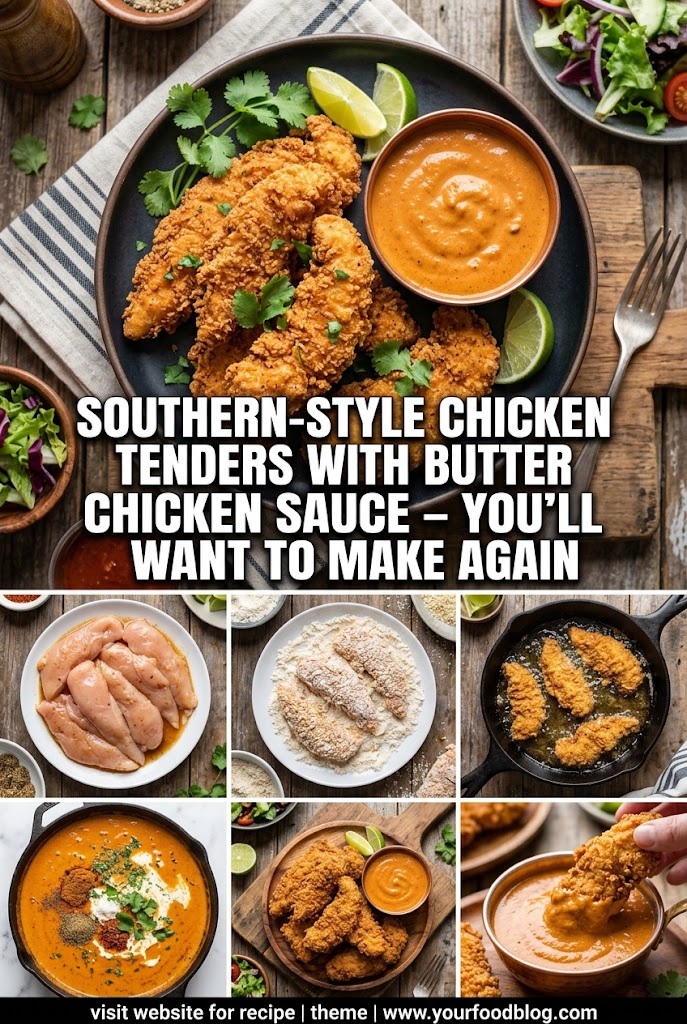
Southern-Style Chicken Tenders with Butter Chicken Sauce – You’ll Want to Make Again
In the vast world of culinary arts, few things are as universally beloved as the perfect fried chicken tender. It is the ultimate comfort food, a staple of American Southern hospitality, and a testament to the magic that happens when simple ingredients are treated with respect. But what happens when you take that quintessential Southern classic and marry it with the rich, velvety, and aromatically complex world of Indian Butter Chicken?
The result is a culinary masterpiece: Southern-Style Chicken Tenders with Butter Chicken Sauce. This fusion dish is not just a meal; it is a sensory journey that bridges the gap between the Deep South and Old Delhi. In this comprehensive guide, we will explore every facet of this dish, from the science of the perfect crunch to the aromatic secrets of the “Makhani” sauce.
The Philosophy of Fusion: Why Southern Fried Meets Indian Spices
At first glance, rural Georgia and Northern India might seem worlds apart. However, their culinary philosophies share a common thread: the use of fat, spice, and time to create deep, soul-satisfying flavors.
Southern fried chicken relies on the acidity of buttermilk and the heat of cayenne to balance the richness of the deep fry. Similarly, Butter Chicken (Murgh Makhani) relies on the acidity of tomatoes and the warmth of garam masala to balance the decadence of cream and butter. By combining these two, we create a “flavor bomb” where the textural contrast of the crispy breading provides the perfect vessel for the silken sauce.
Part 1: Anatomy of the Perfect Southern-Style Chicken Tender
To achieve a tender that stands up to a heavy sauce, you cannot settle for average. You need a crust that stays crispy even when bathed in gravy.
1. The Importance of the Cut
While many use breast meat, the “tenderloin” is a specific muscle located beneath the breast. It is naturally more succulent and cooks faster. If you are using full chicken breasts, ensure you slice them against the grain into even strips. This ensures every bite is easy to chew and holds onto the moisture.
2. The Buttermilk Brine: The Secret to Tenderness
The most critical step in Southern frying is the buttermilk soak. Buttermilk is mildly acidic. This acidity gently breaks down the protein fibers in the chicken, ensuring it remains “fork-tender” even after hitting high-heat oil.
- The Science: Lactic acid in buttermilk tenderizes without making the meat mushy, unlike harsher acids like vinegar or lemon juice.
- The Flavor Infusion: We don’t just use plain buttermilk. We season the brine with salt, pepper, garlic powder, and a dash of hot sauce. This ensures the chicken is seasoned from the inside out.
3. The Dredging Technique: The “Craggy” Crust
To get those “nooks and crannies” that trap the Butter Chicken sauce, you need a specific dredging technique.
- The Flour Blend: Use a mix of All-Purpose flour and cornstarch (an 80/20 ratio). The cornstarch prevents the development of too much gluten, resulting in a lighter, crispier snap.
- The Double Dip: For maximum crunch, dip the chicken in the flour, back into the buttermilk, and then into the flour again.
- The “Flake” Secret: Drizzle a few tablespoons of the buttermilk brine into your dry flour mix and rub it in with your fingers. This creates small clumps of dough that stick to the chicken, turning into ultra-crispy “shards” once fried.
Part 2: The Butter Chicken Sauce (Makhani) – A Masterclass
The sauce is the soul of this dish. Known in India as “Makhani” sauce, it is a blend of tomatoes, aromatics, and dairy.
1. The Aromatics: The Holy Trinity
Every great Butter Chicken sauce starts with the slow sautéing of ginger, garlic, and green chilies.
- Ginger-Garlic Paste: Using a fresh paste rather than powdered versions provides a zingy, sharp baseline that cuts through the cream.
- The Fat: While oil works, starting with clarified butter (Ghee) adds a nutty depth that defines authentic Indian cooking.
2. The Tomato Base
Traditionally, Roma tomatoes are used for their low water content and balanced acidity. For the smoothest sauce, many chefs prefer canned tomato purée or passata. The key is to cook the tomatoes down until the oil begins to separate from the edges—a process in Indian cooking known as “Bhuna.” This ensures the raw tomato taste is gone, replaced by a deep, concentrated sweetness.
3. The Spice Profile
This is where the magic happens. A Southern-style fusion requires a specific balance:
- Kashmiri Chili Powder: This provides a vibrant red color without overwhelming heat. It is milder than cayenne but much more flavorful.
- Garam Masala: A blend of warming spices like cinnamon, cardamom, and cloves.
- Kasuri Methi (Dried Fenugreek Leaves): This is the “secret ingredient.” It provides a slightly bitter, maple-syrup-like aroma that is the hallmark of professional-grade Butter Chicken.
4. Finishing with Elegance
The sauce is finished with heavy cream and cold cubes of butter. This emulsification creates the “velvet” texture. A touch of honey or sugar is often added to balance the acidity of the tomatoes.
Part 3: The Recipe – Step-by-Step Instructions
Ingredients for the Chicken
- 2 lbs Chicken Tenderloins
- 2 cups Buttermilk
- 2 tbsp Hot Sauce (Louisiana style)
- 3 cups All-Purpose Flour
- 1/2 cup Cornstarch
- 2 tsp Smoked Paprika
- 2 tsp Garlic Powder
- Salt and Black Pepper to taste
- Peanut oil or Vegetable oil for frying
Ingredients for the Butter Chicken Sauce
- 4 tbsp Unsalted Butter (divided)
- 1 tbsp Ghee or Neutral Oil
- 1 large Onion, finely diced
- 2 tbsp Ginger-Garlic Paste
- 1 cup Tomato Purée (Passata)
- 1 tsp Kashmiri Chili Powder
- 1 tsp Garam Masala
- 1/2 tsp Turmeric
- 1 cup Heavy Cream
- 1 tbsp Kasuri Methi (crushed)
- 1 tsp Honey
- Salt to taste
Instructions
Step 1: The Marination
In a large bowl, whisk together buttermilk, hot sauce, salt, and pepper. Submerge the chicken tenderloins in the mixture. Cover and refrigerate for at least 4 hours, though overnight is preferred. This allows the enzymes to work their magic on the protein.
Step 2: Preparing the Sauce
While the chicken is marinating, prepare the sauce.
- Heat ghee and 1 tbsp of butter in a pan over medium heat.
- Add the onions and sauté until golden brown. Do not rush this; caramelized onions provide the base sweetness.
- Stir in the ginger-garlic paste and cook for 2 minutes until the raw smell disappears.
- Add the tomato purée, chili powder, turmeric, and salt. Cover and cook on low heat for 10-15 minutes until the sauce thickens and the fat separates.
- (Optional but Recommended) Blend the sauce until completely smooth using an immersion blender.
- Stir in the heavy cream and honey. Let it simmer for 5 minutes.
- Add the remaining butter, garam masala, and crushed kasuri methi. Keep warm on low heat.
Step 3: The Breading Process
In a shallow dish, whisk together flour, cornstarch, paprika, garlic powder, salt, and pepper. Take a tender from the buttermilk, let the excess drip off, and coat it thoroughly in the flour mixture. Press the flour into the meat. For an extra-thick crust, dip it back into the buttermilk and then back into the flour. Place the breaded tenders on a wire rack and let them sit for 15 minutes. This “resting” period helps the breading adhere to the chicken and prevents it from falling off in the fryer.
Step 4: The Fry
Heat 2 inches of oil in a heavy-bottomed skillet or Dutch oven to 350°F (175°C). Fry the chicken in batches to avoid crowding the pan, which drops the oil temperature and leads to greasy tenders. Fry for 3-4 minutes per side until the internal temperature reaches 165°F and the exterior is deep golden brown. Drain on a wire rack—never on paper towels, as the steam will make the bottom of the tenders soggy.
Step 5: The Assembly
You have two choices:
- The Dip Method: Serve the crispy tenders on a platter with the warm Butter Chicken sauce in a bowl for dipping. This preserves the maximum crunch.
- The Toss Method: Lightly drizzle the sauce over the tenders just before serving. Garnish with fresh cilantro and a swirl of cream.
Part 4: Pro-Tips for the Ultimate Experience
Oil Temperature Management
The biggest mistake in home frying is incorrect oil temperature. If the oil is too cold, the chicken absorbs the grease. If it’s too hot, the outside burns before the inside cooks. Use an instant-read thermometer to maintain a steady 350°F.
The Power of Resting
Letting the chicken rest after breading is the difference between a amateur and a pro. It allows the flour to hydrate, creating a structural bond with the chicken skin. This ensures the crust doesn’t “shatter” and fall off when you take a bite.
Sourcing Your Spices
For the Butter Chicken sauce, the quality of your Garam Masala is paramount. If possible, toast whole peppercorns, cinnamon sticks, and cardamom pods in a dry pan and grind them yourself. The aromatic oils are far more potent when freshly released.
Achieving the “Restaurant Glow”
That bright orange/red color in Indian restaurants often comes from food coloring, but you can achieve it naturally. Use high-quality Kashmiri chili powder and ensure your tomato base is cooked down until it is dark red before adding the white cream. The interaction of the deep red and the white cream creates that iconic sunset-orange hue.
Part 5: Healthier Alternatives – Air Fryer & Baking Instructions
If you want the flavor without the deep-frying, you can still enjoy this dish.
Air Fryer Method
- Follow the breading instructions, but add 2 tablespoons of oil directly into the flour mixture to create a “sandy” texture.
- Preheat the air fryer to 400°F (200°C).
- Spray the tenders generously with oil spray.
- Cook for 12-15 minutes, flipping halfway through, until crispy and golden.
Oven-Baked Method
- Preheat oven to 425°F (220°C).
- Place a wire rack over a baking sheet. This allows hot air to circulate under the chicken, preventing a soggy bottom.
- Bake for 18-20 minutes. For a more “fried” look, toast your flour in a pan before breading the chicken.
Part 6: Pairing and Serving Suggestions
To turn this into a full Southern-Indian feast, consider the following sides:
1. Garlic Butter Naan
While biscuits are traditional in the South, Garlic Naan is the perfect tool for mopping up every last drop of Butter Chicken sauce. The charred, bubbly bread complements the fried texture of the chicken perfectly.
2. Turmeric-Spiced Coleslaw
A Southern staple with a twist. Make a traditional vinegar-based slaw but add a pinch of turmeric, toasted mustard seeds, and chopped cilantro. The acidity and crunch provide a necessary palate cleanser between rich bites of chicken and sauce.
3. Saffron Pilaf
A light, aromatic Basmati rice pilaf with saffron and peas offers a gentle base that doesn’t compete with the heavy flavors of the main dish.
4. Beverage Pairings
- Non-Alcoholic: A Mango Lassi is the classic choice, providing a cool, yogurt-based counterbalance to the spices. Alternatively, a sweet Southern Iced Tea with lemon works surprisingly well.
- Alcoholic: A hoppy IPA (India Pale Ale) has the bitterness to cut through the fat of the butter and cream, while a crisp Riesling can handle the spice.
Part 7: The History of the Components
The Origins of Fried Chicken
Fried chicken as we know it in the American South is a result of the fusion of West African seasoning techniques and Scottish deep-frying traditions. In the 18th and 19th centuries, enslaved Africans perfected the art of seasoning the flour and the meat, creating the flavorful, crispy dish that became a cornerstone of American cuisine.
The Story of Murgh Makhani
Butter Chicken was invented in the 1950s by Kundan Lal Gujral at the Moti Mahal restaurant in Delhi. Gujral wanted to find a way to reuse leftover Tandoori chicken that had dried out. He created a sauce of tomato, butter, and cream to rehydrate the meat, inadvertently creating one of the world’s most popular dishes.
By combining these two histories, we are participating in a long tradition of culinary evolution—taking existing “leftovers” or “staples” and elevating them through cross-cultural exchange.
Part 8: Storing and Reheating
If you happen to have leftovers, proper storage is key to maintaining the integrity of the dish.
- Storage: Store the chicken and the sauce in separate airtight containers. If the chicken is stored in the sauce, the breading will become completely soft.
- Reheating the Chicken: Avoid the microwave at all costs. Instead, place the tenders in an oven or toaster oven at 375°F for 5-8 minutes. This will re-crisp the exterior.
- Reheating the Sauce: Warm the sauce on the stovetop over low heat. If it has thickened too much in the fridge, add a splash of water or milk to bring it back to its original consistency.
Part 9: Troubleshooting Common Issues
Why is my breading falling off?
This usually happens because the chicken was too wet when it hit the flour, or it wasn’t allowed to rest. Make sure to shake off excess buttermilk and let the breaded chicken sit for 15 minutes before frying.
Why is my sauce grainy?
Grainy sauce is usually caused by the ginger-garlic paste not being cooked enough or the onions not being blended finely. If your sauce isn’t smooth, pass it through a fine-mesh sieve (chinois) before adding the cream.
The chicken is dark on the outside but raw inside?
The oil was too hot. If this happens, take the chicken out and finish it in a 350°F oven for a few minutes. Next time, use a thermometer to ensure the oil stays at 350°F.
Part 10: Frequently Asked Questions (FAQ)
Can I use chicken thighs instead of tenders? Absolutely. Chicken thighs are more flavorful and harder to overcook. Just ensure you cut them into even strips so they fry at the same rate.
Is Kashmiri chili powder very spicy? No, it is valued more for its color and mild warmth. If you cannot find it, use a mix of 3 parts paprika and 1 part cayenne pepper.
What is the best oil for frying? Peanut oil is the gold standard for Southern frying because it has a high smoke point and a neutral flavor. However, vegetable oil or canola oil also work well.
How do I make the sauce vegan? While the chicken can be replaced with cauliflower or tofu, the sauce requires coconut milk instead of heavy cream and vegan butter or oil instead of dairy butter. Note that the flavor profile will change significantly.
Can I make the sauce ahead of time? Yes! The Butter Chicken sauce actually tastes better the next day as the spices have more time to meld. Just reheat gently before serving.
The Sensory Experience: A Final Word
When you sit down to eat these Southern-Style Chicken Tenders with Butter Chicken Sauce, take a moment to appreciate the aesthetics. The golden-brown, craggy crust of the chicken should be visible through the glossy, vibrant orange sauce.
As you take the first bite, you should hear a distinct crunch. That’s the Southern heritage speaking. Then, the velvet sauce coats your tongue, bringing the warmth of cumin, the sweetness of tomatoes, and the floral notes of fenugreek. This is the heart of India.
It is a dish that defies borders and proves that comfort is a universal language. Whether you are serving this for a family Sunday dinner or an adventurous dinner party, it is a recipe that people will ask for again and again. It isn’t just “fusion” for the sake of being trendy; it is a logical, delicious evolution of two of the world’s greatest comfort foods.
Prepare your kitchen, gather your spices, and get ready to experience the best of both worlds. The Southern-Style Chicken Tender has found its perfect partner in the Butter Chicken Sauce, and your taste buds will thank you for the introduction.
Meta Title: Best Southern-Style Chicken Tenders with Butter Chicken Sauce Recipe Meta Description: Discover the ultimate fusion recipe: Crispy Southern-Style Chicken Tenders paired with a rich, authentic Indian Butter Chicken Sauce. A step-by-step guide to the perfect crunch and flavor.