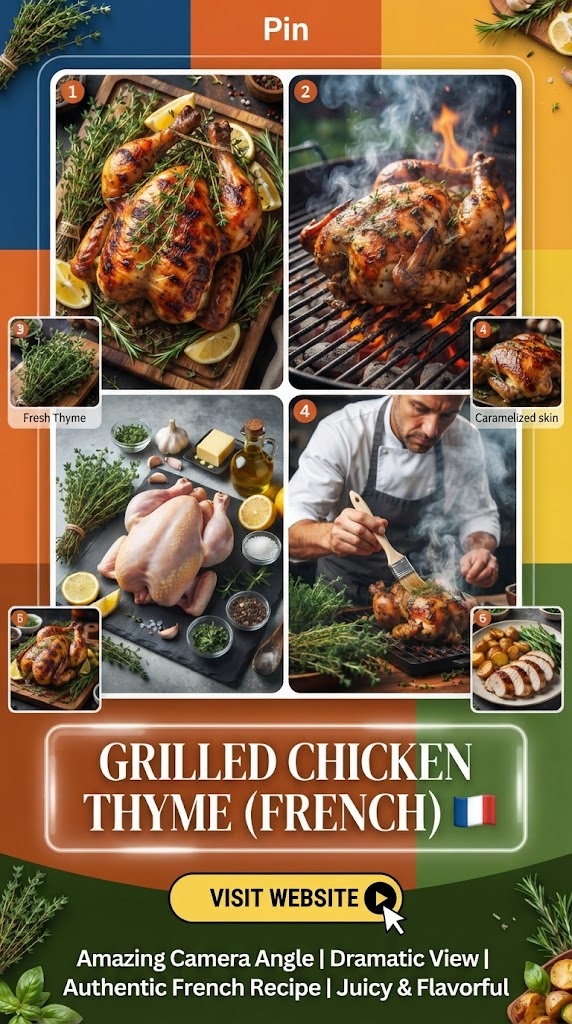
Grilled Chicken Thyme (French)
When one thinks of French cuisine, the mind often wanders to the complex mother sauces of Paris or the delicate pastries of a high-end pâtisserie. However, the true soul of French cooking resides in the countryside—in the rustic, sun-drenched kitchens of Provence. It is here that the Grilled Chicken Thyme (Poulet Grillé au Thym) was perfected. This dish is the epitome of French culinary philosophy: using a handful of high-quality ingredients and precise techniques to create a meal that is greater than the sum of its parts.
In this comprehensive guide, we will explore the history, the science, and the soulful preparation of this iconic dish. Whether you are a backyard barbecue enthusiast in the United States or an aspiring home chef looking to master French techniques, this deep dive will provide everything you need to know about creating the perfect French Grilled Chicken with Thyme.
The Historical Significance of Thyme in French Cuisine
Thyme (Thymus vulgaris) is more than just a herb in France; it is a cultural cornerstone. Known locally in the south of France as farigoule, thyme grows wild across the rocky hillsides of the Mediterranean coast. For centuries, it has been the backbone of the bouquet garni and the herbes de Provence blend.
Historically, French peasants relied on these wild aromatics to flavor leaner meats. Chicken, being a staple of the French farmstead, became the natural partner for thyme. The herb’s earthy, slightly minty, and lemony undertones perfectly complement the richness of chicken fat, especially when subjected to the high heat of a grill. This combination is a “marriage of terroir,” representing the very essence of the French landscape.
Selecting the Finest Ingredients: The Foundation of Flavor
You cannot hide behind a heavy sauce in this recipe. Because the ingredient list is short, the quality of each item is paramount.
1. The Poultry
In France, the Poulet de Bresse is the gold standard, but in the United States, you should look for:
- Air-Chilled Chicken: Unlike water-chilled chicken, air-chilled birds don’t absorb excess water. This leads to a more concentrated flavor and much crispier skin.
- Pasture-Raised or Organic: These birds tend to have a firmer texture and a more “chicken-forward” taste due to their varied diet.
- The Cut: While a whole spatchcocked chicken is traditional for even grilling, bone-in, skin-on thighs are the most forgiving and flavorful for beginners.
2. The Thyme
- Fresh vs. Dried: For grilling, fresh thyme is non-negotiable. Fresh sprigs contain essential oils that release slowly under heat. If you must use dried, use only a third of the amount, as it is more concentrated and can become bitter if charred.
- Varieties: While common English thyme is standard, Lemon Thyme is a fantastic French variation that adds a bright, citrusy top note to the grilled meat.
3. The Fat
- Unsalted European-Style Butter: Use butter with a higher fat content (like Kerrygold or Plugra) for basting.
- Extra Virgin Olive Oil: For the marinade, choose a cold-pressed oil with a peppery finish to mimic the oils of the Mediterranean.
4. The Aromatics
- Garlic: Use fresh cloves, never the pre-minced jarred variety.
- Fleur de Sel: This “flower of salt” from the French coast provides a delicate crunch and clean saltiness.
- Lemon: High-quality Meyer lemons offer a sweeter, less acidic profile that pairs beautifully with thyme.
Preparation Techniques: Spatchcocking and Marinating
The Magic of Spatchcocking
To achieve the perfect French grilled chicken, you should master the “spatchcock” or “butterfly” technique. By removing the backbone and flattening the bird, you ensure that the dark meat (legs/thighs) and the white meat (breasts) reach their ideal internal temperatures at the same time. It also exposes more skin to the heat, ensuring maximum crispiness.
How to Spatchcock:
- Place the chicken breast-side down.
- Using heavy-duty kitchen shears, cut along both sides of the backbone.
- Remove the backbone (save it for stock!).
- Flip the chicken over and press down firmly on the breastbone until you hear a crack and the bird lies flat.
The Provençal Marinade
The goal of the marinade isn’t just to flavor the meat but to tenderize it.
- The Ratio: 3 parts oil to 1 part acid (lemon juice or white wine vinegar).
- The Infusion: Crush the thyme sprigs and garlic cloves to release their oils before adding them to the oil.
- Timing: Marinate for at least 4 hours, but ideally 12–24 hours. The salt in the marinade acts as a brine, drawing moisture into the muscle fibers.
The Science of the Grill: Heat Management
Grilling is where the French “art of fire” comes into play. You are looking for two things: the Maillard Reaction (browning) and an even internal cook.
Two-Zone Grilling
This is the secret to perfect chicken. Whether using charcoal or gas, set up two zones:
- Direct Heat (Hot Zone): Used for searing the skin to a golden brown.
- Indirect Heat (Cool Zone): Used for roasting the chicken through without burning the exterior.
The Importance of Smoke
If using a charcoal grill, adding a few chunks of fruitwood (like apple or cherry) can mimic the traditional wood-fired ovens found in French farmhouses. However, do not over-smoke; the thyme should remain the star of the show.
Step-by-Step Recipe: Classic French Grilled Chicken with Thyme
Ingredients
- 1 whole chicken (approx. 4 lbs), spatchcocked
- 1/2 cup Extra Virgin Olive Oil
- 1/4 cup fresh lemon juice
- 1/2 cup fresh thyme sprigs (lightly bruised)
- 6 cloves of garlic, smashed
- 2 tablespoons Dijon mustard (optional, for an extra French kick)
- 1 tablespoon Fleur de Sel (plus more for finishing)
- 1 teaspoon freshly cracked black pepper
- 4 tablespoons unsalted butter (for basting)
Instructions
1. Preparation
Pat the chicken extremely dry with paper towels. Moisture is the enemy of crispy skin. In a large bowl or heavy-duty Ziploc bag, whisk together the olive oil, lemon juice, Dijon, garlic, salt, pepper, and half of the thyme.
2. Marinating
Place the chicken in the marinade, ensuring it is fully coated. Refrigerate for at least 6 hours. Remove the chicken from the fridge 45 minutes before grilling to bring it to room temperature; this ensures even cooking.
3. Preheating the Grill
Clean your grill grates thoroughly. Light your charcoal or gas grill, aiming for a medium-high direct heat zone (about 400°F).
4. The Sear
Place the chicken skin-side down on the direct heat zone. Press down with a grill press or a heavy cast-iron skillet to ensure full contact. Sear for 5–7 minutes until the skin is golden and begins to release its fat. Watch for flare-ups!
5. The Roast
Move the chicken to the indirect heat zone, skin-side up. Close the lid. This creates an oven-like environment.
6. The Thyme Butter Baste
In a small saucepan on the edge of the grill, melt the butter with the remaining fresh thyme sprigs. Every 10 minutes, brush the chicken with this aromatic butter. This builds layers of flavor and keeps the meat succulent.
7. Checking for Doneness
Use an instant-read thermometer. The chicken is done when the thickest part of the breast reaches 160°F (it will carry over to 165°F while resting) and the thighs reach 175°F.
8. The Rest
This is the most skipped but most important step. Remove the chicken to a warm platter and let it rest for 15 minutes. This allows the juices to redistribute. If you cut it too soon, all that delicious thyme-infused juice will run out onto the board.
Expert Variations to Elevate Your Dish
While the classic version is hard to beat, French cuisine is also about regional adaptation.
1. Honey-Thyme Glaze
For those who prefer a touch of sweetness, whisk 2 tablespoons of lavender honey into your basting butter. The floral notes of the honey play beautifully with the earthy thyme.
2. The “Grand-Mère” Style
Incorporate small pearl onions and thick-cut bacon (lardons) into a foil packet on the grill alongside the chicken. The smoky bacon fat and sweet onions create a traditional “Grandmother’s style” accompaniment.
3. White Wine and Shallot Reduction
While the chicken rests, sauté finely minced shallots in the leftover basting butter, deglaze with a splash of dry French Riesling or Sauvignon Blanc, and pour this over the sliced meat.
Perfect Side Dish Pairings
To serve a truly French meal, the sides must be as considered as the main event.
- Ratatouille: This classic Provençal vegetable stew of eggplant, zucchini, and peppers is the natural partner for grilled chicken. The acidity of the tomatoes cuts through the richness of the chicken.
- Pommes Frites with Truffle Salt: For a bistro feel, serve thin, crispy fries seasoned with a hint of truffle.
- Haricots Verts Almandine: French green beans sautéed in butter with toasted sliced almonds and a squeeze of lemon.
- Salade Verte: A simple green salad with a sharp vinaigrette helps cleanse the palate between bites of savory chicken.
Wine Pairing: Selecting the Right Vintage
The herb-forward and smoky nature of Grilled Chicken Thyme requires a wine that can stand up to the char without overpowering the delicate herbs.
- Chardonnay (Oaked): A buttery California or Burgundy Chardonnay complements the basting butter and the roasted notes of the chicken.
- Rosé de Provence: This is perhaps the most authentic pairing. The dry, crisp, and strawberry-noted profile of a Provençal Rosé is designed for the herbs and heat of Mediterranean grilling.
- Pinot Noir: If you prefer red, a light-bodied Pinot Noir provides enough acidity to balance the fat while offering earthy tones that mirror the thyme.
Troubleshooting Common Grilling Mistakes
Even experienced cooks can run into trouble. Here is how to fix common issues:
- Burnt Skin/Raw Interior: This happens when the heat is too high. Always use the two-zone method. If the skin is browning too fast, move it to the cool side immediately.
- Rubberoy Skin: This is caused by moisture. Ensure the chicken is patted dry before marinating and that you don’t crowd the grill.
- Dry Breast Meat: Usually the result of overcooking. Always use a digital thermometer. Removing the bird at 160°F is the “sweet spot” for juiciness.
- Lack of Herb Flavor: If you can’t taste the thyme, you might be using old herbs. Ensure you “bruise” the fresh sprigs (smash them slightly with the back of a knife) before putting them in the marinade to release the essential oils.
The Nutritional Profile: A Healthy Mediterranean Choice
Grilled Chicken Thyme isn’t just delicious; it’s a pillar of the Mediterranean diet, widely considered one of the healthiest in the world.
- High Protein: Essential for muscle repair and satiety.
- Antioxidants: Thyme is rich in thymol, which has antimicrobial and antioxidant properties.
- Healthy Fats: When using high-quality olive oil, you are consuming monounsaturated fats that are heart-healthy.
- Low Carb: This dish is naturally keto-friendly and gluten-free, making it accessible for almost any dietary requirement.
Conclusion: The Timeless Appeal of the French Grill
Mastering Grilled Chicken Thyme is about more than just following a recipe; it’s about embracing a lifestyle of simplicity and quality. In the fast-paced world of modern cooking, there is something deeply rewarding about the slow process of marinating, the rhythmic basting of the bird, and the unmistakable aroma of thyme hitting hot coals.
As the smoke rises and the skin crackles, you aren’t just making dinner; you are participating in a centuries-old tradition that spans from the hills of Marseille to the backyards of America. Serve it on a large wooden board, pour a glass of chilled Rosé, and enjoy the joie de vivre that only a perfectly grilled French chicken can provide.
Summary Checklist for Success:
- Source: Air-chilled, bone-in chicken.
- Prep: Spatchcock for even cooking.
- Aromatics: Use fresh, bruised thyme sprigs.
- Heat: Two-zone method (Direct/Indirect).
- Finish: 15-minute rest period before carving.
By following this guide, your next cookout will be transformed into a Parisian bistro experience that your guests will remember for years to come. Bon Appétit!