Grilled Chicken Tarragon (French)
The sizzle of a hot grill, the intoxicating aroma of wood smoke, and the unmistakable, sophisticated scent of fresh herbs—this is the essence of a French summer evening. Among the pantheon of classic French poultry dishes, Grilled Chicken Tarragon (known in its native tongue as Poulet Grillé à l’Estragon) stands as a testament to the power of simplicity and high-quality ingredients.
While many associate French cooking with heavy sauces and hours spent over a hot stove, the “grillé” tradition offers a lighter, more vibrant approach to the culinary arts. In this comprehensive guide, we will explore the history, the science, and the soulful execution of the perfect French-style grilled chicken tarragon. From the botanical secrets of the “King of Herbs” to the technical precision required for succulent meat, this is everything you need to bring the flavors of a Parisian bistro to your own backyard.
The Soul of the Dish: Understanding French Tarragon
Before lighting the charcoal, one must understand the protagonist of this dish: Tarragon. In France, tarragon (Artemisia dracunculus) is often referred to as “L’Herbe aux Dragons” (The Herb of Dragons), a name derived from its coiled root system. In the culinary world, it is one of the four fines herbes of French cooking, alongside parsley, chives, and chervil.
French vs. Russian Tarragon
A common mistake for amateur cooks is purchasing the wrong variety. French Tarragon is the gold standard; it possesses a delicate, bittersweet flavor with notes of anise, licorice, and vanilla. It has a slight numbing effect on the tongue due to the presence of estragole. Russian Tarragon, on the other hand, is much hardier but lacks the aromatic punch, often tasting bitter or grassy. For this recipe, French tarragon is non-negotiable.
The Aromatic Profile
Tarragon is unique because it bridges the gap between sweet and savory. When grilled, its volatile oils are released, infusing the chicken with a complex perfume that cuts through the richness of the poultry fat. It is this specific synergy that has made chicken and tarragon an inseparable pair in French gastronomy for centuries.
The Art of the Sourcing: Selecting Your Chicken
In the French culinary tradition, the quality of the bird is the foundation of the meal. In the United States, we must look for specific qualities to replicate the flavor of a French Poulet de Bresse.
- Air-Chilled Chicken: Most supermarket chickens are water-chilled, which adds water weight and dilutes flavor. Air-chilled chicken has a more concentrated taste and, crucially, skin that crisps up much better on the grill.
- Skin-On, Bone-In: For the best grilled results, use thighs or breasts with the skin and bone intact. The bone acts as an insulator, keeping the meat juicy, while the skin renders its fat to baste the meat naturally.
- Pasture-Raised: If your budget allows, seek out pasture-raised or organic chicken. These birds have a more robust fat profile that stands up well to the char of the grill.
The Master Recipe: Grilled Chicken Tarragon (Poulet Grillé à l’Estragon)
This recipe focuses on a double-layer of flavor: a deep-penetrating marinade and a fresh herbal finish.
Ingredients
For the Chicken:
- 4-6 Large chicken thighs (skin-on, bone-in) or 2 large breasts (halved)
- 3 Tablespoons high-quality extra virgin olive oil
- 2 Tablespoons Dijon mustard (preferably Maille or Grey Poupon)
- 3 Cloves of garlic, smashed and minced into a paste
- 1 Large shallot, finely minced
- 2 Tablespoons fresh French tarragon, chopped
- 1 Teaspoon lemon zest
- 1 Teaspoon Fleur de Sel (or kosher salt)
- 1/2 Teaspoon freshly cracked white pepper
For the Tarragon Finishing Butter (Beurre à l’Estragon):
- 4 Tablespoons unsalted high-fat butter (European style)
- 1 Tablespoon fresh tarragon, finely minced
- A squeeze of fresh lemon juice
- A pinch of sea salt
Step-by-Step Instructions
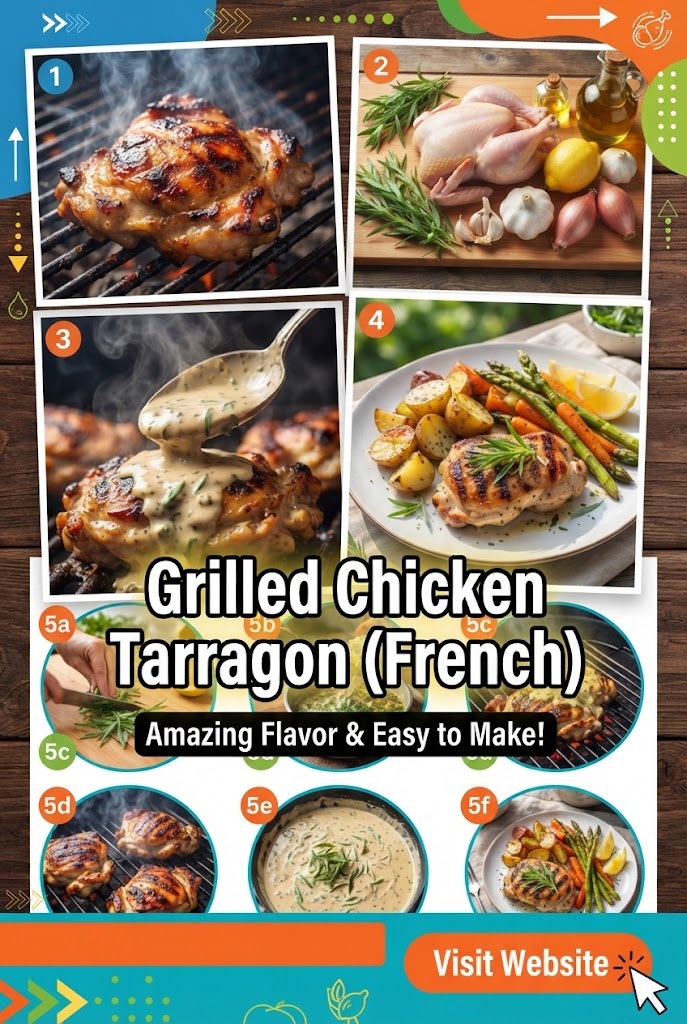
1. The Marinade (The “Mise en Place”)
In a large glass bowl, whisk together the olive oil, Dijon mustard, minced garlic, shallots, lemon zest, and the chopped tarragon. The mustard acts as an emulsifier, helping the oil and aromatics cling to the chicken.
Pat the chicken dry with paper towels—moisture is the enemy of a good sear. Place the chicken in the marinade, ensuring it gets under the skin where possible. Cover and refrigerate for at least 2 hours, though 6 hours is ideal. Remove the chicken from the fridge 30 minutes before grilling to bring it to room temperature; this ensures even cooking.
2. Preparing the Grill
Whether you use charcoal or gas, you want a two-zone fire.
- Hot Zone: For searing and creating that beautiful Maillard reaction (the browning of sugars and proteins).
- Cool Zone: For indirect cooking, allowing the chicken to reach the safe internal temperature without burning the delicate herbs in the marinade.
Clean your grates thoroughly and oil them lightly using a paper towel dipped in vegetable oil.
3. The Sear
Place the chicken skin-side down over the hot zone. Do not move it for 4–5 minutes. You are looking for deep golden-brown grill marks. If flare-ups occur, move the chicken momentarily. Once the skin is crisp and releases easily from the grate, flip the chicken.
4. The Indirect Roast
Move the chicken to the cool zone. Cover the grill. This mimics an oven environment. The tarragon in the marinade will begin to perfume the meat from the inside out. Cook until the internal temperature reaches 165°F (74°C) for breasts or 175°F (80°C) for thighs. Thighs benefit from a higher temperature to break down connective tissue.
5. The Rest and Finish
This is the most skipped, yet most vital step. Remove the chicken to a warm platter. Immediately place a dollop of the Tarragon Finishing Butter on each piece. Tent loosely with foil and let it rest for 8–10 minutes. This allows the juices to redistribute and the butter to melt into a silken sauce.
Advanced Techniques for the Grill Master
The Spatchcock Method
If you are grilling a whole chicken, “spatchcocking” (removing the backbone) is the preferred French method for the grill. It allows the bird to lay flat, ensuring the dark meat and white meat finish cooking at the same time while maximizing the surface area for the tarragon rub.
Use of Wood Chips
To elevate the French bistro feel, add a handful of soaked grapevine cuttings or applewood chips to your charcoal. The subtle sweetness of fruitwood smoke complements the anise notes of the tarragon perfectly. Avoid heavy smokes like hickory or mesquite, which will overwhelm the delicate herb.
Brining for Maximum Juiciness
For those who fear dry chicken breasts, a “dry brine” is a game-changer. Rub the chicken with salt and tarragon 24 hours in advance and leave it uncovered in the fridge. This seasons the meat deeply and dries out the skin for an incredible crunch.
Classic French Side Dishes (Les Accompagnements)
Grilled Chicken Tarragon should not stand alone. To create a cohesive French meal, consider these traditional pairings:
1. Pommes Frites with Tarragon Salt
Hand-cut potatoes, double-fried until golden, and tossed with a mixture of fine sea salt and pulverized dried tarragon. The starchiness of the potato is the perfect foil for the herbal chicken.
2. Ratatouille Niçoise
A slow-simmered medley of eggplant, zucchini, peppers, and tomatoes. The acidity of the tomatoes cuts through the richness of the chicken skin, while the shared Mediterranean herbs create a bridge between the two dishes.
3. Haricots Verts with Toasted Almonds
French green beans are thinner and more tender than American varieties. Blanch them quickly and sauté with butter and sliced almonds (Amandine style) for a light, crunchy side.
4. Salade Verte
A simple green salad with a sharp Dijon vinaigrette. In France, the salad is often served after the main course to cleanse the palate, but it works beautifully alongside grilled poultry.
Wine Pairing: The Sommelier’s Choice
When pairing wine with Grilled Chicken Tarragon, you must account for both the charred flavor of the grill and the herbal, licorice-like notes of the tarragon.
- Chardonnay (Burgundy): A lightly oaked Chablis or a Meursault is the classic choice. The wine’s acidity handles the fat, while the subtle oak echoes the smokiness of the grill.
- Sauvignon Blanc (Loire Valley): A Sancerre or Pouilly-Fumé offers “green” notes that vibrate in harmony with the fresh tarragon.
- Dry Rosé (Provence): If you are grilling outdoors on a hot day, a chilled Provençal rosé is unbeatable. Its strawberry and mineral notes provide a refreshing counterpoint to the savory garlic and shallots.
- Light Red (Beaujolais): If you prefer red wine, reach for a Gamay-based Beaujolais. It is low in tannins and high in fruit, ensuring it doesn’t clash with the herbal profile.
The Chemistry of Flavor: Why Tarragon and Chicken Work
Culinary science tells us that chicken is a relatively “blank canvas” with a high concentration of fats that absorb fat-soluble flavor compounds. Tarragon contains estragole, a compound that is also found in basil and fennel. When heated, estragole undergoes a transformation, becoming less sharp and more integrated.
The addition of Dijon mustard in the marinade isn’t just for flavor; the vinegar in the mustard acts as a mild tenderizer, breaking down surface proteins so the tarragon oil can penetrate deeper. The result is a layered flavor profile: the initial hit of char, followed by the richness of the chicken fat, and ending with the cooling, sophisticated lift of the tarragon.
Variations on the Theme
While the grilled version is supreme in the summer, the French have several riffs on this classic:
Poulet à l’Estragon (Cream Sauce Version)
If you prefer a more decadent meal, you can grill the chicken and then serve it with a classic French cream sauce. De-glaze a pan with white wine, add heavy cream, a tablespoon of Dijon, and a handful of fresh tarragon. Simmer until thickened and pour over the grilled meat.
Tarragon and Honey Glaze
For those who enjoy a bit of sweetness, adding a teaspoon of lavender honey to the marinade creates a beautiful glaze that caramelizes quickly on the grill, offering a southern French (Provençal) twist.
The “Poulet en Crapaudine”
This is a specific French butchery technique where the chicken is split and trussed to look like a toad (crapaud). It’s then heavily seasoned with tarragon and pressed under a heavy weight (like a cast-iron skillet) on the grill to ensure maximum skin-to-heat contact.
Troubleshooting Common Grilling Mistakes
- Burning the Herbs: Tarragon is delicate. If you put too many fresh leaves directly over a high flame, they will turn bitter and black. This is why we use them in the marinade (where they are protected by oil) and in the finishing butter.
- Flare-ups: Chicken skin renders a lot of fat. Keep a spray bottle of water nearby or be ready to move the chicken to the indirect heat zone to prevent the meat from tasting like soot.
- Using Dried Tarragon: Dried tarragon loses about 80% of the nuance of the fresh herb. If you must use dried, use only a third of the amount and “wake it up” by soaking it in the lemon juice or oil before adding it to the chicken.
- Not Cleaning the Grill: Any leftover fish or beef bits on the grill will taint the delicate anise flavor of the tarragon chicken. Start with a pristine grate.
The Health Benefits of Tarragon
Beyond its culinary uses, French tarragon has been used in traditional medicine for centuries. It is a rich source of phytonutrients and antioxidants.
- Digestion: In France, tarragon is often consumed to aid digestion after a heavy meal.
- Sleep Aid: The mild sedative properties of the herb are said to help with insomnia.
- Mineral Rich: It contains small but significant amounts of manganese, iron, and potassium.
Pairing this herb with lean, grilled chicken makes this dish an excellent choice for those following a Mediterranean, Paleo, or Keto diet.
Bringing the Bistro Home
The secret to French cooking isn’t complexity; it’s intent. When you make Grilled Chicken Tarragon, you are participating in a tradition that values the season, the source, and the specific harmony of flavors.
As you serve this dish—perhaps outdoors, with a crisp white tablecloth and a bottle of wine—take a moment to appreciate the “Le Art de Vivre” (The Art of Living). The way the green flecks of tarragon look against the charred golden skin, the way the lemon zest brightens the heavy smoke, and the way the first bite transports you to a sidewalk café in Lyon.
Grilled Chicken Tarragon is more than just a recipe; it is a celebration of summer, a masterclass in herbal balance, and a reminder that with just a few right ingredients, any backyard can become a destination for world-class gastronomy.
Summary of Key Tips for Success
- Always use French Tarragon, never Russian.
- Air-chilled, bone-in chicken provides the best flavor and texture.
- Two-zone grilling prevents burning while ensuring the meat is cooked through.
- Never skip the rest period; it is when the chicken becomes truly succulent.
- Finish with herb butter to add that professional French “gloss” and depth of flavor.
By following these principles, you will master one of the most elegant and satisfying dishes in the French repertoire. Bon Appétit!