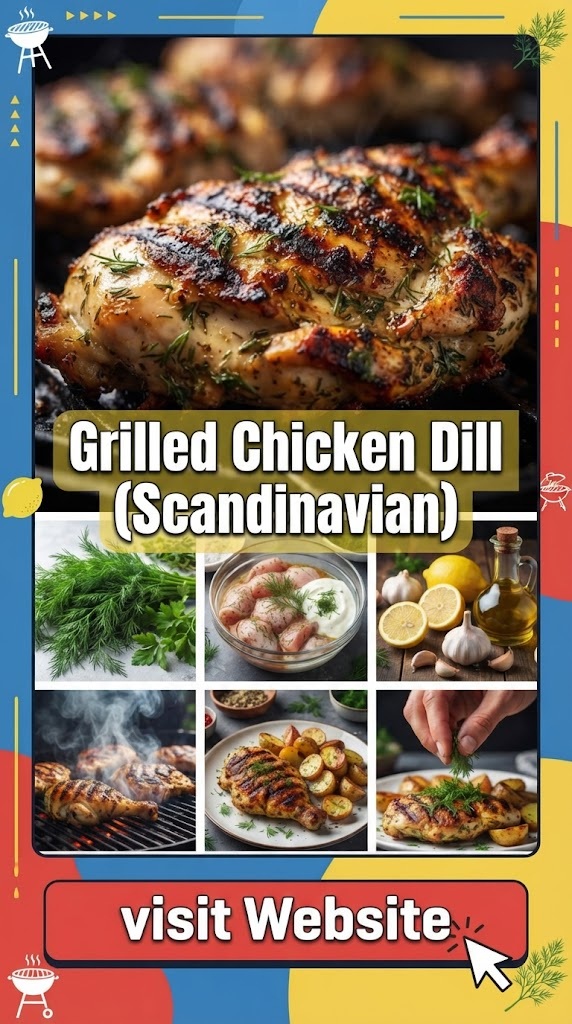
Grilled Chicken Dill (Scandinavian)
Grilled Chicken with Dill — Scandinavian Style
Grilled Chicken Dill is a fresh, flavorful Scandinavian-inspired recipe that combines juicy grilled chicken with the delicate, grassy flavor of fresh dill, bright lemon, creamy yogurt, and a few simple seasonings. Scandinavian cooking is often celebrated for letting quality ingredients speak for themselves, and this chicken recipe follows exactly that philosophy. The marinade is simple enough for a weeknight dinner but flavorful enough to serve at a summer gathering, family barbecue, or elegant dinner.
The combination of chicken, dill, lemon, garlic, and creamy dairy creates a balanced flavor profile. The chicken becomes tender and juicy while the dill adds a clean herbal character. A hot grill provides lightly charred edges and beautiful grill marks, while the lemon keeps the overall flavor bright rather than heavy.
This recipe works especially well with boneless, skinless chicken breasts, although chicken thighs can also be used. Serve it with roasted potatoes, cucumber salad, grilled vegetables, rye bread, boiled potatoes, or a simple Scandinavian-style yogurt sauce.
Why You’ll Love This Grilled Chicken Dill Recipe
There are plenty of reasons to make this recipe part of your regular dinner rotation.
First, it uses everyday ingredients. You do not need a long list of unusual spices or complicated sauces. Fresh dill, lemon, garlic, olive oil, yogurt, salt, and pepper create most of the flavor.
Second, the preparation is straightforward. The chicken is marinated, grilled, rested, and served. Once the grill is hot, the cooking process is quick.
Third, the recipe is versatile. You can serve the chicken as a complete dinner, slice it over salad, place it inside flatbread, or use leftovers for sandwiches and wraps.
Finally, the Scandinavian-inspired flavor makes this recipe feel different from traditional barbecue chicken. Instead of a sweet or smoky barbecue sauce, the emphasis is on fresh herbs, citrus, creamy ingredients, and natural chicken flavor.
Complete Grilled Chicken Dill Recipe
Recipe Name
Grilled Chicken Dill (Scandinavian Style)
Cuisine
Scandinavian-inspired
Preparation Time
20 minutes
Marinating Time
30 minutes to 4 hours
Cooking Time
12–18 minutes, depending on thickness
Total Time
Approximately 1 hour, including a short marinade
Servings
4
Difficulty
Easy
Ingredients
For the Chicken
- 4 boneless, skinless chicken breasts, about 6–8 ounces each
- 2 tablespoons olive oil
- 3 tablespoons fresh dill, finely chopped
- 2 tablespoons fresh lemon juice
- 1 teaspoon lemon zest
- 3 cloves garlic, finely minced
- 1 teaspoon Dijon mustard
- 1 teaspoon honey
- 1 teaspoon kosher salt
- ½ teaspoon freshly ground black pepper
- ½ teaspoon onion powder
- ¼ teaspoon paprika
- 2 tablespoons plain Greek yogurt
For the Dill Yogurt Sauce
- ¾ cup plain Greek yogurt
- 2 tablespoons fresh dill, finely chopped
- 1 tablespoon fresh lemon juice
- 1 teaspoon lemon zest
- 1 small garlic clove, finely grated
- ½ teaspoon Dijon mustard
- ¼ teaspoon salt
- ¼ teaspoon black pepper
- 1–2 tablespoons water, as needed for consistency
Optional Garnish
- Fresh dill sprigs
- Lemon wedges
- Thinly sliced cucumber
- Fresh parsley
- A small drizzle of olive oil
- Freshly cracked black pepper
Ingredient Notes
Chicken
Boneless, skinless chicken breasts are excellent for this recipe because they cook relatively quickly and absorb the dill marinade well. However, chicken breasts can become dry if overcooked.
For more forgiving results, you can use boneless, skinless chicken thighs. They contain more fat and remain juicy even if they stay on the grill slightly longer.
If your chicken breasts are very thick, pound them gently to an even thickness. This is one of the most important steps for even cooking.
Fresh Dill
Fresh dill is the star herb of this recipe. Its flavor is delicate, slightly grassy, and wonderfully fresh.
Fresh dill is strongly preferred over dried dill when available. Dried dill can work in an emergency, but it does not provide exactly the same bright Scandinavian character.
If using dried dill, use approximately one-third of the amount called for fresh dill.
Lemon
Lemon provides acidity that balances the richness of the yogurt and olive oil. Lemon juice also helps the marinade taste lighter and fresher.
Fresh lemon juice is preferable to bottled lemon juice.
Do not throw away the lemon zest. It contains aromatic oils that provide a powerful citrus fragrance without adding too much acidity.
Greek Yogurt
Greek yogurt adds creaminess and helps create a flavorful coating around the chicken. It also works beautifully as the base of the accompanying dill sauce.
Plain full-fat or low-fat Greek yogurt can be used.
Avoid sweetened yogurt.
Dijon Mustard
Dijon mustard adds subtle sharpness and helps balance the creamy ingredients. It should not dominate the final flavor.
Honey
A small amount of honey adds gentle sweetness and encourages attractive browning on the grill.
You do not need much. The purpose is balance rather than creating sweet chicken.
How to Prepare the Chicken
Step 1: Prepare the Chicken
Remove the chicken breasts from their packaging and pat them thoroughly dry with paper towels.
Drying the surface is important because excess moisture can interfere with browning.
If the chicken breasts are unevenly thick, place each breast between two pieces of plastic wrap or parchment paper.
Using the flat side of a meat mallet, gently pound the thicker portions until the chicken has a more consistent thickness.
You do not need to flatten the chicken extremely thin. Aim for approximately ¾ to 1 inch thickness.
An evenly thick piece of chicken cooks more consistently and reduces the chance that the exterior becomes dry while the center is still undercooked.
Step 2: Make the Dill Marinade
Add the olive oil, chopped fresh dill, lemon juice, lemon zest, minced garlic, Dijon mustard, honey, salt, black pepper, onion powder, paprika, and Greek yogurt to a medium bowl.
Whisk until the mixture is smooth and evenly combined.
The marinade should smell fresh, lemony, garlicky, and herbal.
Taste the marinade before adding the raw chicken.
Adjust the seasoning if necessary.
If it tastes too sharp, add a tiny amount of honey.
If it tastes flat, add another small pinch of salt.
If you want a stronger lemon flavor, add additional zest rather than a large quantity of juice.
Step 3: Marinate the Chicken
Place the chicken into a large resealable food bag or shallow glass container.
Pour the dill marinade over the chicken.
Turn each piece several times so the marinade coats all sides.
Cover the container or seal the bag.
Refrigerate for at least 30 minutes.
For deeper flavor, marinate for 2–4 hours.
Avoid leaving the chicken in this acidic marinade for excessively long periods. Very long marinating can affect the texture of the chicken.
For convenience, you can prepare the marinade in the morning and grill the chicken later the same day.
Step 4: Prepare the Grill
Preheat your grill to medium-high heat.
For a gas grill, allow it to heat for several minutes before cooking.
For a charcoal grill, prepare a hot cooking zone while leaving another area with less direct heat.
Clean the grill grates thoroughly.
Lightly oil the grates using a paper towel coated with a small amount of cooking oil.
Use tongs to rub the oiled towel across the grates.
This helps reduce sticking and encourages attractive grill marks.
Step 5: Remove Excess Marinade
Take the chicken out of the refrigerator shortly before grilling.
Remove each piece from the marinade.
Allow excess marinade to drip off.
You do not need to scrape every bit of marinade away. A thin coating is desirable.
Discard any marinade that has been in contact with raw chicken. Do not reuse it unless it is thoroughly cooked separately.
Step 6: Grill the Chicken
Place the chicken breasts on the hot grill.
You should hear a gentle sizzling sound when they touch the grates.
Close the grill lid.
Cook for approximately 5–7 minutes on the first side, depending on thickness and grill temperature.
Avoid repeatedly moving the chicken.
Allowing it to remain undisturbed helps develop grill marks.
After the first side has browned, turn the chicken over.
Continue cooking for another 5–7 minutes.
The exact cooking time depends on the thickness of the chicken and the temperature of your grill.
Step 7: Check the Internal Temperature
The safest way to determine whether chicken is fully cooked is to use an instant-read thermometer.
Insert the thermometer into the thickest portion of the chicken without touching the grill grate.
The chicken should reach an internal temperature of 165°F (74°C).
If the chicken has browned nicely but the center has not reached the required temperature, move it to a cooler section of the grill and continue cooking with the lid closed.
This indirect cooking method helps prevent the outside from becoming excessively dark while the inside finishes cooking.
Step 8: Rest the Chicken
Once the chicken is cooked, transfer it to a clean plate or cutting board.
Allow it to rest for approximately 5 minutes.
Do not immediately slice the chicken.
Resting gives the juices time to redistribute throughout the meat.
If you slice immediately, more of the juices may escape onto the cutting board.
After resting, slice the chicken against the grain.
How to Make the Dill Yogurt Sauce
While the chicken cooks, prepare the sauce.
Add Greek yogurt to a small bowl.
Stir in fresh dill, lemon juice, lemon zest, grated garlic, Dijon mustard, salt, and black pepper.
Mix thoroughly.
If the sauce is too thick, add water one teaspoon at a time until it reaches your preferred consistency.
Taste and adjust the seasoning.
For a stronger Scandinavian-style herb flavor, add another tablespoon of fresh dill.
For more acidity, add a small squeeze of lemon.
For a milder sauce, add a little additional yogurt.
Refrigerate the sauce until ready to serve.
How to Serve Grilled Chicken Dill
Place sliced grilled chicken on a serving platter.
Spoon the dill yogurt sauce over the top or serve it separately.
Garnish with fresh dill and lemon wedges.
For an attractive Scandinavian-inspired presentation, arrange thin cucumber slices around the chicken.
You can also add boiled baby potatoes and a simple green salad.
The fresh colors of the herbs, cucumber, lemon, and chicken make this dish particularly attractive on a summer table.
Best Side Dishes
Scandinavian-Style Boiled Potatoes
Small potatoes boiled until tender are one of the easiest accompaniments.
Toss them with butter, fresh dill, salt, and black pepper.
Their mild flavor allows the chicken to remain the centerpiece.
Cucumber Salad
Thinly slice cucumbers and combine them with a light dressing made from vinegar, dill, salt, pepper, and a small amount of sugar.
The crisp cucumber provides a refreshing contrast to the grilled chicken.
Roasted Vegetables
Roasted carrots, potatoes, asparagus, or Brussels sprouts work wonderfully.
The caramelized vegetables provide a warm contrast to the cool dill yogurt sauce.
Green Salad
A simple salad of lettuce, cucumber, radishes, and herbs is an excellent choice.
Use a light lemon vinaigrette instead of a heavy dressing.
Rye Bread
For a more traditional Scandinavian-inspired meal, serve slices of rye bread alongside the chicken.
The hearty flavor of rye complements the fresh dill and creamy yogurt.
Tips for Juicy Grilled Chicken
1. Do Not Skip the Thickness Check
The biggest problem with grilled chicken breast is uneven thickness.
If one end is much thicker than the other, the thinner portion may become dry before the thick portion is cooked.
Pounding the chicken gently creates more even cooking.
2. Do Not Over-Marinate
The marinade is designed to flavor and tenderize the chicken, but longer is not always better.
A few hours is generally plenty for this recipe.
3. Preheat the Grill
A properly heated grill produces better browning and helps prevent sticking.
Putting chicken onto a cold or lukewarm grill can result in pale, unevenly cooked meat.
4. Oil the Grates
Even if the chicken contains oil in the marinade, lightly oiling the grill grates can help reduce sticking.
5. Avoid Constant Flipping
You do not need to turn the chicken repeatedly.
Cook one side, turn it once, and finish cooking.
6. Use a Thermometer
Cooking time is only an estimate.
The thickness of the chicken, grill temperature, weather, and grill type can all change cooking time.
An instant-read thermometer gives you a much more reliable indication of doneness.
7. Let It Rest
Five minutes can make a noticeable difference in texture.
Common Mistakes to Avoid
Using Too Much Dill
Dill has a distinctive flavor. Adding excessive quantities can overwhelm the other ingredients.
Start with the recommended amount and increase it if desired.
Burning the Garlic
Garlic can brown quickly on a hot grill.
If the grill is extremely hot, excess pieces of garlic on the chicken surface may burn.
Keep the heat at medium-high rather than maximum.
Cooking by Time Alone
Two chicken breasts of different thicknesses may require completely different cooking times.
Always check the thickest portion.
Cutting the Chicken Too Soon
Allow the chicken to rest before slicing.
Using Cold Chicken Directly on the Grill
Taking the chicken out of the refrigerator shortly before grilling is fine, but do not leave raw chicken sitting at room temperature for an extended period.
Variations
Grilled Dill Chicken Thighs
Replace chicken breasts with boneless, skinless chicken thighs.
Thighs are naturally juicy and flavorful.
They usually tolerate grilling longer than chicken breasts without drying out.
Creamy Dill Chicken
After grilling, slice the chicken and serve it with an extra-generous portion of dill yogurt sauce.
This creates a creamy, refreshing dinner.
Lemon-Dill Chicken Skewers
Cut the chicken into bite-sized pieces.
Marinate as directed.
Thread the chicken onto skewers and grill until cooked through.
Alternate the chicken with bell peppers, onions, or zucchini.
Spicy Dill Chicken
Add ¼–½ teaspoon crushed red pepper flakes to the marinade.
The mild heat works surprisingly well with lemon and dill.
Garlic-Herb Dill Chicken
Add chopped parsley and a little extra garlic to the marinade.
This creates a more pronounced herb profile.
Dill Chicken Salad
Use leftover grilled chicken over lettuce, cucumber, tomatoes, radishes, and boiled potatoes.
Add dill yogurt sauce as the dressing.
Make-Ahead Instructions
The marinade can be prepared up to a day ahead and stored in the refrigerator in a covered container.
The dill yogurt sauce can also be prepared several hours before serving.
For meal preparation, grill the chicken, cool it properly, slice it, and refrigerate it in an airtight container.
Keep the sauce stored separately.
This makes the recipe excellent for lunches.
Add sliced chicken to salad bowls, wraps, grain bowls, or sandwiches throughout the week.
Storage
Store leftover cooked chicken in an airtight container in the refrigerator.
For best quality, use refrigerated leftovers within a few days.
Store the dill yogurt sauce separately.
When reheating chicken, use gentle heat to reduce the chance of drying it out.
A covered skillet with a small splash of water or broth can help retain moisture.
You can also enjoy the chicken cold in salads and sandwiches.
Frequently Asked Questions
Can I use dried dill?
Yes. Fresh dill provides the brightest flavor, but dried dill can be used.
Because dried herbs are more concentrated, use less than you would use fresh dill.
Can I use chicken thighs?
Absolutely.
Boneless chicken thighs are especially good for grilling because they remain moist and flavorful.
Can I prepare this without a grill?
Yes.
You can cook the marinated chicken in a grill pan, skillet, or oven.
If using a skillet, cook over medium to medium-high heat until the chicken reaches 165°F (74°C) internally.
Can I make this recipe dairy-free?
Yes.
Replace Greek yogurt with an unsweetened dairy-free yogurt alternative.
Choose one with a neutral flavor.
Can I make it ahead?
Yes.
Prepare the marinade and sauce ahead of time.
You can also grill the chicken ahead and refrigerate it for later meals.
What if I don’t have fresh lemon?
Bottled lemon juice can work, although fresh lemon is preferred.
If using bottled juice, consider adding a small amount of finely grated lemon zest if available.
Can I use chicken breasts without pounding them?
Yes, but cooking will be less predictable.
Very thick chicken breasts can take significantly longer to cook in the center.
Pounding them to an even thickness produces better results.
Nutrition Considerations
This recipe emphasizes lean protein, fresh herbs, lemon, yogurt, and moderate amounts of oil.
The exact nutritional values will depend on the size of the chicken breasts, the type of yogurt used, and the amount of sauce served.
For a lighter version, use low-fat Greek yogurt and reduce the amount of oil slightly.
For a richer version, use full-fat Greek yogurt and chicken thighs.
Because nutritional requirements vary, calculate the nutrition using the exact ingredients and quantities you use if precise dietary information is important.
A Simple Dinner Serving Plan
For a complete family meal, serve:
- Grilled dill chicken
- Buttered baby potatoes
- Fresh cucumber-dill salad
- Steamed green beans
- Dill yogurt sauce
- Lemon wedges
- Rye bread
This combination creates a balanced meal with protein, vegetables, carbohydrates, fresh herbs, and creamy sauce.
For a lighter dinner, skip the bread and potatoes and serve the chicken with a large cucumber and leafy-green salad.
For a summer barbecue, arrange the chicken on a large platter with grilled vegetables and small bowls of dill yogurt sauce.
The Secret to the Best Scandinavian-Inspired Flavor
The most important principle behind this recipe is balance.
Dill provides the herbal character.
Lemon provides brightness.
Garlic adds savory depth.
Yogurt contributes creaminess and mild tang.
Olive oil helps carry the flavors and keeps the chicken moist.
Honey adds just enough sweetness to round everything out.
None of these ingredients needs to dominate.
That balance is what makes the chicken taste fresh and elegant rather than heavily seasoned.
Fresh dill is especially important because it provides a clean, aromatic quality that pairs naturally with chicken and lemon.
Final Recipe Summary
Grilled Chicken Dill (Scandinavian Style) is a simple but flavorful grilled chicken dinner featuring fresh dill, lemon, garlic, yogurt, Dijon mustard, and a touch of honey.
The chicken is marinated for at least 30 minutes, grilled over medium-high heat, and cooked until it reaches an internal temperature of 165°F (74°C). After a short resting period, it is sliced and served with a creamy dill yogurt sauce.
For the best results:
- Pound chicken breasts to an even thickness.
- Prepare the lemon-dill yogurt marinade.
- Marinate for 30 minutes to 4 hours.
- Preheat and lightly oil the grill.
- Grill the chicken until browned and fully cooked.
- Check the thickest portion with a thermometer.
- Rest the chicken for about 5 minutes.
- Slice against the grain.
- Serve with creamy dill yogurt sauce.
- Garnish with fresh dill and lemon.
The final result is juicy, tender chicken with bright citrus notes, fresh dill aroma, subtle garlic, and a creamy sauce that makes every bite satisfying.
Whether you’re preparing a quick family dinner, summer barbecue, meal-prep lunch, or Scandinavian-inspired feast, this Grilled Chicken Dill recipe is an easy way to turn simple ingredients into a memorable meal.